
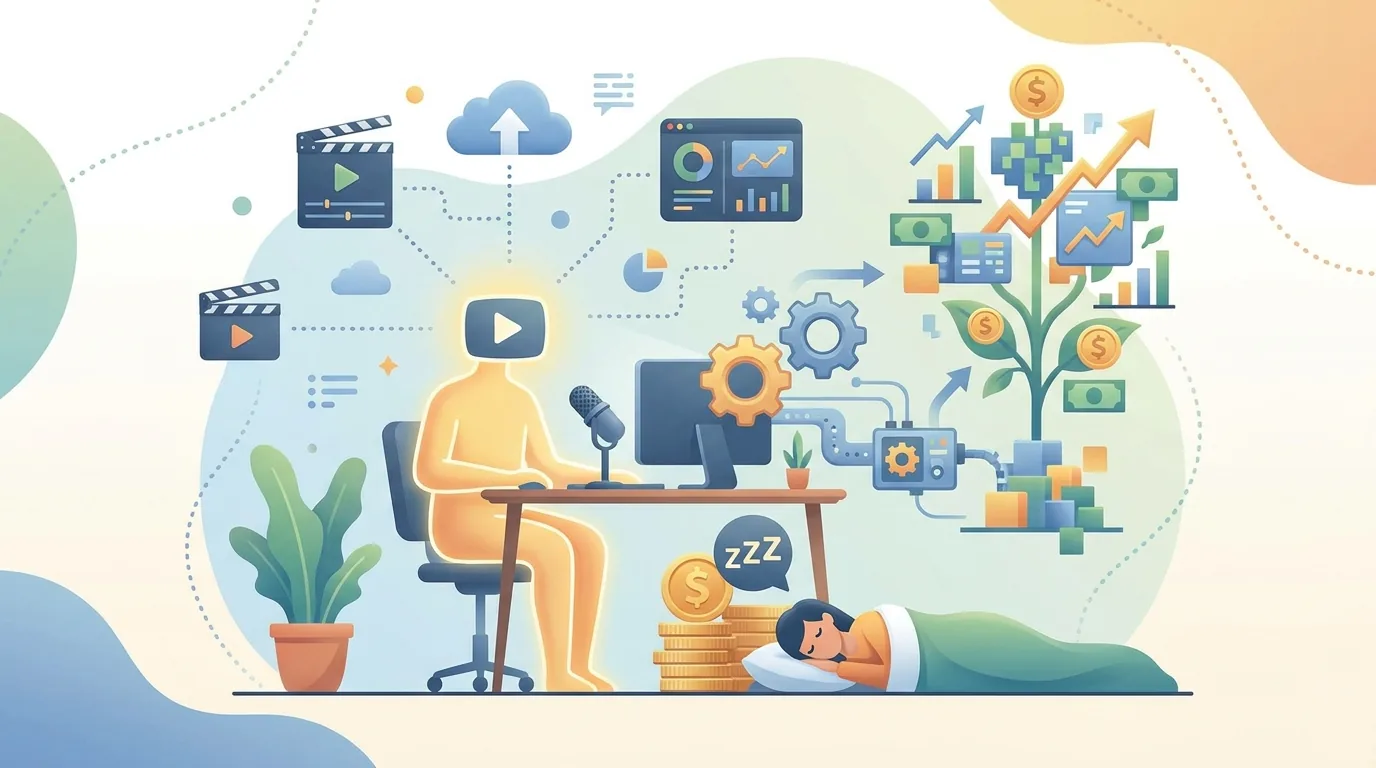
Build passive income with a faceless YouTube channel by choosing a valuable audience, publishing original videos that solve repeatable problems, and adding revenue streams beyond ads. The income is not fully passive at first: expect ongoing research, quality checks, and updates until a searchable video library and reliable production system begin compounding.
Key takeaways:
- YouTube’s official monetization policy defines inauthentic content as material that is “mass-produced or repetitive,” so faceless videos need meaningful original value and variation.
- One creator case shared on Reddit reported 37,800 subscribers and 1.4 million views in 30 days, but the post is an anecdote rather than a revenue guarantee.
- The same creator attributed 99% of channel growth problems to inconsistency and neglected SEO, making publishing discipline and search intent operational priorities.
- A faceless channel can earn from YouTube ads, affiliate commissions, digital products, sponsorships, and services; no single revenue source should carry the business.
What is a faceless YouTube channel?
A faceless YouTube channel publishes videos without making the creator’s face the main on-screen element. It can use original screen recordings, narration, diagrams, licensed footage, animation, product demonstrations, interviews, or hands-only filming. A faceless format is a production choice, not permission to recycle content: the video must still give viewers a clear reason to watch and return.
A useful distinction is between *faceless* and *anonymous-looking*. A software tutorial that records a real workflow, explains why each setting matters, and shows the outcome is faceless but clearly authored. By contrast, a generic script read over unrelated clips can feel interchangeable even if it has narration. The goal is not merely to remove the presenter from frame; it is to replace the presenter’s on-camera presence with useful evidence, explanation, and visual clarity.
Step 1: Define a repeatable on-screen format
Action: Choose one visual format that matches your topic, such as narrated screen walkthroughs for software, animated explainers for history, or diagrams for personal finance.
Requires: A defined viewer, a consistent narrator or voice style, and access to visuals you own, create, license, or can lawfully use. Write a one-sentence channel promise: “I help [audience] achieve [outcome] with [format].”
How to tell it worked: A stranger can identify the audience and expected outcome after seeing one title and thumbnail. The format also lets you plan multiple distinct videos without changing the channel’s purpose.
For example, “I help first-time spreadsheet users build practical trackers through narrated screen walkthroughs” is more operational than “I make productivity videos.” The first promise identifies the viewer, the outcome, and the visual method. It also creates natural topic boundaries: a budget tracker, a project tracker, a checklist, and an error-fixing tutorial can all serve the same audience while remaining genuinely different videos.
Before starting, prepare a topic list, a simple editing workflow, a place to track sources and licenses, and enough time for regular publishing. Plan on several weeks to establish a workable library and longer to build compounding traffic; “passive” describes the eventual leverage of evergreen videos, not zero work from day one. A simple workflow can be: choose one question, research it, write a brief, produce the video, check the final cut, publish it, then record what viewers did next.
How do faceless YouTube channels generate revenue?
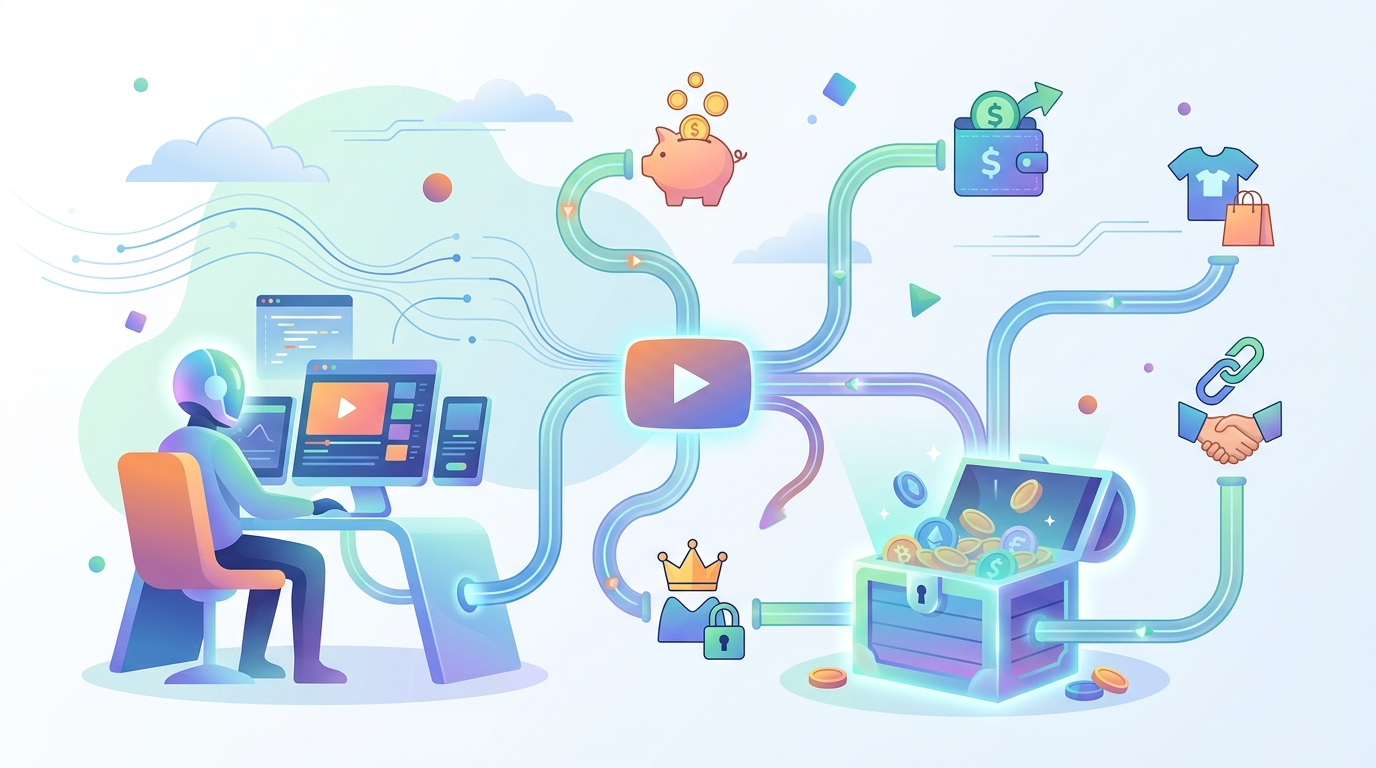
Faceless YouTube channels generate revenue by turning qualified attention into several income streams: YouTube advertising revenue, affiliate commissions, sponsorships, digital products, and paid services. The strongest fit depends on viewer intent. A tutorial watched by buyers can support an affiliate recommendation, while an educational explainer may build ad revenue and later sell a template or course.
The practical question is not “How do I monetize every view?” It is “What is the most helpful next step for the viewer who chose this video?” A viewer watching a comparison may be deciding between options. A viewer watching a beginner lesson may need a worksheet. A viewer watching a troubleshooting tutorial may need implementation help. Those are different intents, so they should not all receive the same call to action.
Step 2: Match each video to one revenue path
Action: Assign one primary monetization path before scripting each video. For example, a comparison video can lead to a relevant affiliate disclosure and link; an educational video can point to a worksheet, newsletter, or consultation.
Requires: An offer that genuinely helps the same viewer, clear disclosures where required, and a description layout that puts the useful resource near the top without hiding the video’s main answer.
How to tell it worked: Each upload has a measurable next action: a tracked link click, an email signup, a product sale, or eligible ad revenue. If a video has no logical viewer action, keep it as an audience-building video rather than forcing an offer.
A worked example: imagine a video titled “How to organize a simple project tracker.” Its primary goal might be a downloadable tracker template. The script should still teach the setup in full, because the template is a convenience rather than a withheld answer. The description can identify the template clearly, while the video measures whether viewers click it. A separate video comparing tools could use a relevant disclosed affiliate link instead. Keeping one primary action per video makes results easier to interpret.
Avoid treating views as the only business metric. A smaller audience with a defined problem can be more useful than broad entertainment traffic if the channel offers an appropriate solution. Build a spreadsheet that records the topic, viewer problem, call to action, link, and result. That record shows which video types produce durable income rather than temporary spikes. Add a final column for the video’s intended role—ads, affiliate, product, service, or audience building—so a low-click educational video is not mistakenly judged by the standards of a comparison video.
What niches are best for faceless YouTube channels?
The best faceless YouTube niches combine lasting viewer demand, a problem you can explain accurately, and a responsible way to monetize. Business, personal finance, technology, education, software tutorials, career skills, and practical home topics often suit faceless production because screen recordings, charts, demonstrations, and narration can carry the lesson without a presenter on camera.
A niche is not just a category label. “Technology” is broad; “software tutorials for a specific type of beginner” is closer to a usable channel focus. Likewise, “personal finance” is broad, while a clearly bounded educational format can make it easier to select visuals, research claims, and avoid presenting generalized information as personal advice. The narrower starting point also makes titles and thumbnails less vague.
Step 3: Validate a niche with a 20-topic map
Action: List 20 video questions a specific viewer would search or repeatedly need answered. Mix beginner questions, comparisons, mistakes, checklists, and updates. Use a free faceless-video topic ideas library only as a starting point, then narrow every idea to your audience’s exact situation.
Requires: Familiarity with the subject or access to credible sources and a review process. In high-stakes areas such as finance, health, or legal topics, accuracy matters more than uploading quickly; do not present general information as personalized advice.
How to tell it worked: The 20 ideas cluster around one audience and solve related problems. You can also name a relevant advertiser, affiliate product, downloadable resource, or service for at least some topics without changing the channel’s purpose.
Use the map to test whether the channel has both depth and variety. For a tutorial-led channel, the 20 questions might include a setup guide, common mistakes, a comparison, a troubleshooting walkthrough, a checklist, and an update to an earlier lesson. If every idea is just the same topic with a slightly altered title, the niche may be too thin. If the list jumps among unrelated audiences, the channel promise is probably too broad.
High-RPM topics can be attractive because advertisers value audiences near purchasing decisions, but RPM varies by audience location, video length, season, advertiser demand, and content suitability. Choose a niche you can research and sustain. A poorly researched finance channel is not a better business than a clear, useful tutorial channel simply because the category sounds lucrative. Sustainable expertise, source discipline, and repeatable visual demonstrations are stronger foundations than chasing a category label.
How can AI enhance faceless YouTube content creation?
AI can enhance faceless YouTube content creation by speeding up research organization, outline drafting, narration preparation, visual planning, caption creation, and versioning. AI does not make a video original by itself. The creator remains responsible for factual accuracy, copyright permissions, voice and visual choices, and whether the finished video offers a distinct explanation rather than a generic template.
The safest use of AI is as a structured first-pass assistant rather than an unattended publisher. It can help turn a messy list of research notes into a draft sequence, identify places where a viewer may need an example, or generate caption text for review. It cannot establish that a claim is current, that a clip is licensed, or that an explanation actually answers the viewer’s question. Those decisions remain editorial decisions.
Step 4: Use AI for drafts, then add human editorial judgment
Action: Build a production brief for every video: viewer question, promised answer, sources, original angle, visual plan, and call to action. Use AI-generated assistance to create a first outline or caption draft, then revise it with your own examples, fact checks, pacing, and visuals.
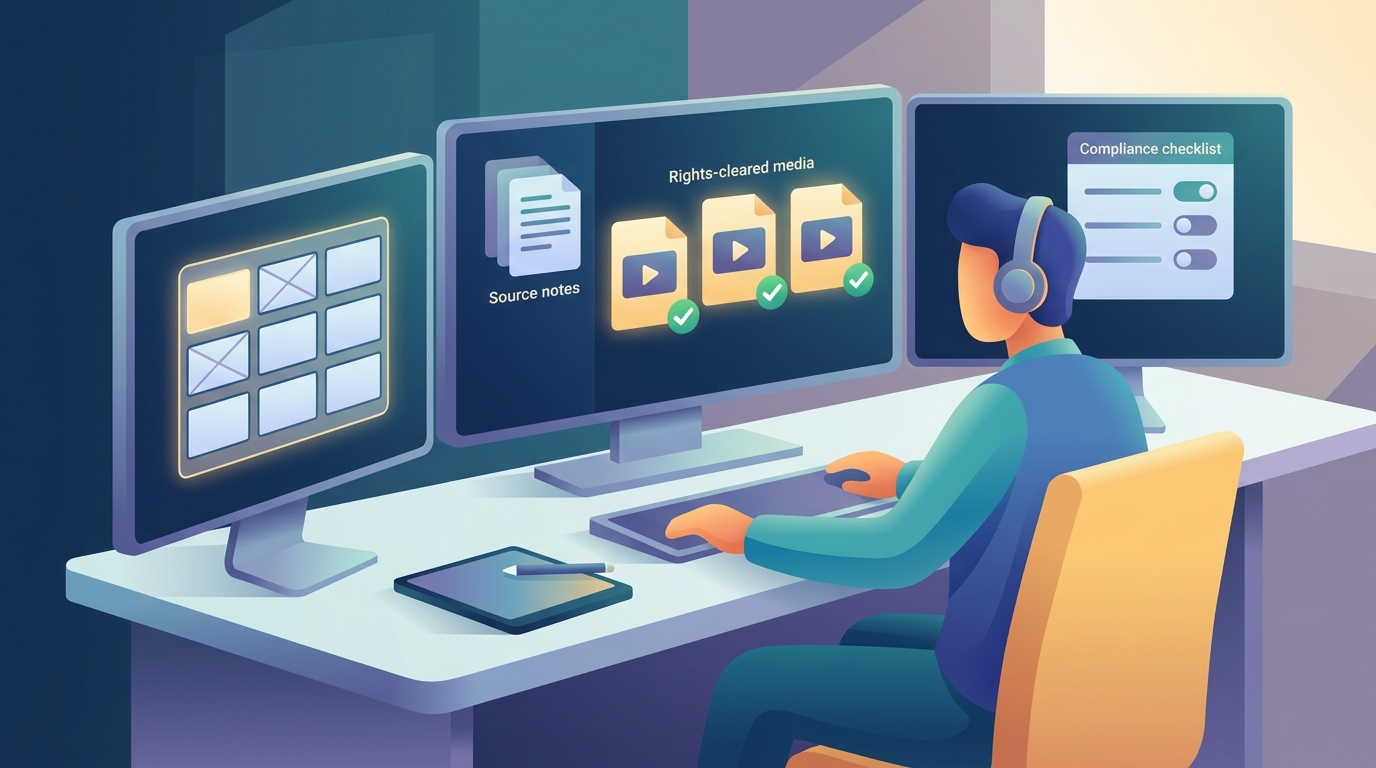
Requires: Source notes, an editorial checklist, and a final human review before publishing. Do not use generated narration or visuals as a substitute for reviewing claims, checking licensing, and ensuring the script is understandable aloud.
How to tell it worked: The final video contains a specific thesis, examples tailored to the audience, and visuals that advance the explanation. It should not be interchangeable with dozens of videos made from the same prompt.
A practical brief might state: “Viewer question: how does a beginner build a project tracker? Promised answer: a step-by-step screen walkthrough. Original angle: show a simple starter version before optional features. Visual plan: record each setup action, then show the completed tracker. Call to action: template for viewers who want a starting file.” This brief gives the editor a way to reject unsupported tangents before production begins.
A useful workflow separates creation from verification. First collect sources and viewer questions. Next outline the answer. Then create narration and visuals. Finally, watch the exported video from the viewer’s perspective and remove unsupported claims, repetitive scenes, and weak transitions. That review protects trust and makes the workflow sustainable. It also helps identify where a visual is decorative rather than explanatory, which is a frequent weakness in faceless videos.
What are YouTube's policies on faceless content?
YouTube does not prohibit faceless videos, but faceless channels must meet the same monetization standards as every other channel. YouTube, the platform publisher of the official YouTube Partner Program monetization policy, states: “Inauthentic content is content that is mass-produced or repetitive” (YouTube monetization policy). The same policy explains that the standard applies to content made with a template and little variation or content easily replicable at scale.
That statement matters because a channel can use a consistent format without making every episode effectively the same. A recurring intro, visual style, or editing system can support brand consistency. The risk increases when the substance barely changes: near-identical scripts, repeated sequences with only names swapped, unrelated stock footage, or narration that adds no meaningful analysis. A review should focus on what the viewer learns from this particular upload.
Step 5: Create evidence of originality in every upload
Action: Add original analysis, scripting, narration, editing decisions, demonstrations, or commentary that materially changes the viewer’s understanding. Keep project files, source links, licenses, and notes on what your video adds.
Requires: A review checklist that asks: Is the script specific? Are the visuals relevant? Is the material licensed or original? Does this episode differ meaningfully from the last one? Is the title accurate?
How to tell it worked: A reviewer can point to your unique explanation and the reason each clip, chart, or screen recording exists. The channel does not rely on bulk uploads with near-identical scripts, reused visual sequences, or lightly altered narration.
Make the checklist concrete. For each video, write one sentence explaining the original contribution: perhaps it demonstrates a real workflow, compares choices against named criteria, explains a difficult concept using a custom diagram, or answers a specific beginner mistake. Then match each visual to a line in the script. If a scene cannot be connected to a point, replace it with a screen recording, diagram, example, or remove it.
Treat policy compliance as a design constraint, not a final-stage cleanup task. Do not build a channel around scraping articles, reading unedited text over stock footage, or copying other creators’ structure scene for scene. Originality also improves retention because viewers can tell when the video was made for their question rather than for an upload quota. Maintaining source notes and project files also makes it easier to revise an older evergreen video when the underlying information changes.
How can I improve SEO for faceless YouTube videos?
You can improve faceless YouTube SEO by making the title, opening, spoken explanation, visuals, and description answer the same specific viewer question. Search optimization is not keyword repetition. It is accurate packaging plus a satisfying answer that earns clicks, watch time, and useful engagement from the people the video was made for.
Think of each upload as a promise-and-proof sequence. The title and thumbnail make a specific promise. The opening confirms the viewer is in the right place. The body provides the proof through a demonstration, explanation, or example. The description gives supporting context and relevant resources. When these pieces describe different outcomes, the viewer has to work out what the video is actually about—and may leave before receiving the answer.
Step 6: Package one clear search intent per video
Action: Write a title that names the outcome or problem, then open the video by confirming what the viewer will learn. Build the description with a concise summary, relevant resources, and chapters where appropriate. Test several factual title and thumbnail concepts without promising results the video cannot deliver.
Requires: A keyword or question list, a thumbnail system, and an opener that gives context quickly. Browse a free library of video hooks for structural ideas, but rewrite the hook so it truthfully matches your exact video.
How to tell it worked: The title, thumbnail, first minute, and description all describe the same promise. Search viewers do not need to guess whether the video addresses their question.
For example, a video framed around “how to build a simple project tracker” should open by showing the finished tracker and explaining that the video will build it step by step. Its visuals should then show the actual steps, not drift into broad productivity commentary. The description can summarize the process and list the relevant resource. A title about a comparison, however, should compare options against clear criteria rather than turning halfway through into a setup tutorial.
Consistency matters because SEO needs enough published work to reveal patterns. In a Reddit creator case study, the author said 99% of growth issues came from inconsistency and ignoring SEO; the same post reported 37,800 subscribers and 1.4 million views in 30 days (r/ReelFarmer creator post). Treat those figures as one creator’s experience, not a forecast. Use your own analytics to decide which topics deserve follow-ups, which titles attract the wrong viewers, and which questions repeatedly bring viewers to the channel.
What are common mistakes with faceless YouTube channels?
Common faceless YouTube channel mistakes are copying competitors too closely, publishing templated videos at scale, choosing a niche only for ad rates, neglecting search intent, and failing to review scripts and visuals. These mistakes reduce viewer trust and can create monetization risk when the content becomes repetitive or lacks a clear original contribution.
Another common mistake is treating the production system as more important than the editorial system. Templates can reduce repetitive work, but they should standardize tasks such as file naming, caption review, source tracking, and export checks—not standardize the actual insight. If every video is planned from the same viewer question, original angle, evidence, and visual rationale, the format can remain efficient without becoming formulaic.
Step 7: Audit quality before increasing output
Action: Publish a small batch, review performance and viewer comments, then improve the weak link before making more videos. Check topic selection, hook clarity, factual accuracy, visual relevance, narration pacing, and the call to action.
Requires: A simple scorecard and the willingness to discard weak formats. Score each upload against your channel promise and the originality checklist rather than judging it only by views in its first days.
How to tell it worked: Your next videos become more precise: the hook matches the title, the visuals support each point, and the audience response reveals recurring questions worth turning into new videos.
A simple scorecard can use yes-or-no checks: Does the title name one clear question or outcome? Does the opening confirm that promise? Does every major claim have support in the creator’s source notes? Does each visual explain a point? Is the call to action relevant to the same viewer problem? Does this episode differ materially from the previous one? The value is not in assigning a complicated score; it is in finding the exact weak link before increasing output.
Do not confuse automation with hands-off publishing. One practical way to standardize production steps is GoFaceless, which can help turn a reviewed topic into a script, voiceover, visuals, and captions; the creator should still approve the claims, sources, and final edit. The durable advantage is a recognizable editorial point of view, not the largest possible upload volume. A reliable channel is built by repeatedly answering a defined audience’s questions with enough care that each new video strengthens, rather than dilutes, the library.
Ready to build the workflow?
Build your first reviewed video workflow with GoFaceless.
Sources & further reading
Keep reading

How to Start a Faceless YouTube Channel in 2026
Start a faceless YouTube channel with a focused niche, original format, 30-day testing plan, and YouTube-compliant AI workflow.
How to Safely Create Monetizable AI YouTube Videos
Create AI-assisted YouTube videos that can be monetized with original editorial work, rights checks, realistic-content disclosure, and review.
Is There a Future for AI-Generated Content on YouTube?
AI-generated YouTube content can monetize when it is original and creator-led. Learn where AI channels face policy, disclosure, and monetization risk.