
Find a niche for an AI YouTube channel by targeting a specific audience with a recurring problem, then proving that viewers want the topic before publishing at scale. Avoid broad categories where established channels dominate; instead, pair an underserved subject with a distinct format, reliable research, and clear disclosure of realistic AI-altered content.
Key takeaways:
- YouTube receives more than 400 hours of video uploads every minute, so a broad topic without a clear audience is difficult to surface.
- Only 76,736 YouTube channels have ever passed 1 million subscribers, which makes a focused channel promise more useful than copying a large creator.
- Small channels struggle to appear in crowded faceless categories such as Business and AI News.
- YouTube says creators must disclose realistic altered or synthetic material: “Creators are required to disclose when they’ve created altered or synthetic content that is realistic.”
What makes a niche oversaturated in the AI YouTube space?
An AI YouTube niche is oversaturated when many channels publish nearly identical videos for the same viewer intent, leaving a new channel with no obvious reason to be chosen. More than 400 hours of video arrive on YouTube every minute, so saturation is not simply a high video count; it is repeated packaging, repeated claims, and entrenched channels owning the same search and recommendation territory. YouTube’s upload-volume figure makes a distinctive angle essential.
- Map the direct substitutes. Search 10 topic phrases a target viewer would use, then inspect the first page of videos and recent uploads. This requires a spreadsheet with channel name, video angle, format, title pattern, and the viewer problem addressed. The step worked when you can state the repeated formula in one sentence, such as “daily AI headlines for entrepreneurs,” rather than merely saying the topic feels crowded.
- Separate a category from a niche. “AI news” is a category; “weekly AI workflow changes for independent bookkeepers” is a niche. Business and AI News are identified as especially crowded faceless categories where small channels barely appear in this niche analysis. Narrow the audience, use case, or outcome until competitors no longer make interchangeable videos.
- Reject clone economics. If the winning videos depend on instant breaking news, celebrity access, or a huge archive, do not copy them. A viable niche gives a new creator a repeatable research advantage, such as translating technical change into one profession’s daily decisions.
How can I research and assess potential niches?
AI YouTube niche research should combine viewer language, competitor evidence, and a small publishing test rather than relying on a topic’s popularity alone. Assess each idea by asking who the viewer is, what question recurs, what videos already answer it, and what your channel can explain differently. A topic is promising when search results show interest but leave a clear audience, format, or outcome unserved.
- Build and score a candidate list. Start with audience groups you understand—students, hobbyists, local-business operators, parents, or skilled trades—and write one recurring question for each. This requires 10 candidate ideas and a simple 1-to-5 score for demand signals, competition, repeatability, credibility, and format fit. The step worked when the highest-scoring ideas include a viewer and a promised result, not just a subject.
Use YouTube search suggestions, comments on adjacent videos, and community discussions to collect the exact questions people ask. Check recent competitors rather than judging only all-time views: a channel can have historic success while its current audience interest has shifted. For topic prompts organized by category, use a free faceless-video ideas library, then rewrite every prompt around a specific audience problem.
Finally, make a pilot batch using one consistent format. Compare whether each video produces relevant comments, follow-up questions, and enough subtopics to continue. The test worked when the audience response points to a repeatable series, such as “one concept, one real-world decision, one practical takeaway.”
Which AI YouTube niches show high demand but low competition?
Potentially underexplored AI YouTube niches include explainers and facts, kids stories, and art and music, according to a creator-community discussion of underrated niches for 2026. Those suggestions are leads to validate, not guaranteed low-competition markets: a creator should still inspect current search results and viewers’ unanswered questions. The strongest opportunity is usually a narrow version of a broad demand area, such as science explainers for curious teenagers or music-history stories for beginners.
- Turn a broad opportunity into a specific series. This requires choosing one audience, one recurring question type, and one visual structure. Community reports identify Space & science, Mystery & unsolved, and Animation & storytelling as better-performing AI niches, while another discussion flags Explainers & facts, Kids stories, and Art & music as underserved growth opportunities. Treat both sources as creator observations, not market-wide measurements.
A useful narrowing pattern is topic + audience + payoff. For example:
| Broad topic | Narrow channel promise |
|---|---|
| Space and science | Explain one strange space event for viewers who dislike jargon |
| Mystery | Reconstruct overlooked historical mysteries with sourced timelines |
| Art and music | Show the story behind one music technique for new listeners |
The step worked when you can draft a season of titles without repeating the same claim. Do not select a niche because AI can generate visuals for it; select it because the viewer returns for the editorial point of view.
How important is differentiation in a saturated market?
Differentiation is the reason a viewer chooses a new AI YouTube channel over an established channel covering the same broad subject. Differentiation does not require inventing a new subject; it requires making a specific promise about audience, evidence, pacing, visual treatment, or outcome. Because only 76,736 channels have ever crossed 1 million subscribers, copying the largest channel’s generic format is a poor launch strategy.
- Write a channel-positioning sentence before producing videos. This requires a sentence in the form: “For [audience], this channel explains [recurring problem] through [distinct format] so they can [outcome].” The step worked when the sentence rules out some otherwise tempting video ideas. A promise that applies to everyone is too broad to guide decisions.
Differentiate in a way viewers can notice quickly. You might use primary-source timelines instead of recycled summaries, explain one decision rather than ten headlines, or make every episode answer one misconception. Keep the underlying standard consistent: a distinctive voice cannot rescue inaccurate research or unclear structure.
Test differentiation in the opening. State the viewer’s problem and the episode’s payoff immediately, then earn attention with evidence rather than generic hype. A library of proven video hooks can help you explore opening structures, but the hook must accurately match the video’s claim. The step worked when titles, thumbnails, and first lines all describe the same promised value.
What role do YouTube policies play in niche selection?
YouTube policies should shape niche selection because some topics demand more careful sourcing, realistic depictions, or sensitive-event judgment than others. A channel about news, health, finance, or realistic reconstructions has a higher risk of misleading viewers when synthetic material changes what appears to have happened. Choose a niche whose research and production standards you can maintain consistently, not merely one that looks easy to automate.
- Run a policy-and-trust review for every proposed format. This requires listing whether the format uses realistic people, realistic events, altered footage, expert-like claims, or sensitive subjects. The step worked when each risk has a production rule: use verified sources, label illustrative scenes internally, avoid presenting generated depictions as documentary proof, and add disclosure when YouTube requires it.
YouTube’s altered-content guidance focuses on content that is meaningfully altered or synthetic and appears realistic. The policy is not a ban on AI-assisted production; it is a reason to build transparency into the format from the first upload. Read the official disclosure guidance before committing to realistic news reenactments, medical scenarios, or depictions of public figures.
Policy-aware niche selection also protects the audience relationship. A science channel can use illustrative visuals while clearly distinguishing visual explanation from evidence. A mystery channel can frame uncertain claims as theories instead of manufacturing certainty.
How does AI content disclosure impact channel growth?
AI content disclosure can support long-term channel growth when creators treat it as a trust signal rather than an obstacle. YouTube requires creators to disclose realistic altered or synthetic content in relevant cases, and YouTube may display a label for viewers. Clear disclosure reduces the chance that a dramatic visual or synthetic voice changes the meaning of a factual claim, especially in niches built on current events or realistic people.
- Create a disclosure checkpoint in the publishing workflow. This requires a final review that asks whether a video contains realistic altered or synthetic material and whether the audience could mistake it for unedited reality. The step worked when the creator can document the decision for every upload and applies the same standard to short-form clips, thumbnails, and long-form videos.
Disclosure does not replace strong editorial judgment. Do not use a label as permission to make a deceptive reconstruction or overstate an uncertain conclusion. Instead, use narration and captions to distinguish sourced fact, interpretation, and illustrative visualization. YouTube’s announcement explains that the disclosure requirement applies when creators make altered or synthetic content that is realistic, including with AI tools, in its AI-labels update.
What are some strategies for engaging an underserved audience?
Underserved audiences engage when a channel reflects their actual vocabulary, constraints, and unanswered follow-up questions. An underserved audience is not necessarily small; it is a group whose needs broad channels flatten into generic advice. Build engagement by making each episode useful to one recognizable viewer and by letting comments determine the next specific problem to solve.
- Design a feedback loop around one audience need. This requires ending videos with a precise question, such as which misconception, task, or case study viewers want next. The step worked when comments give usable topic language instead of only general praise. Group those requests into recurring series, then answer the highest-frequency problems with evidence and a consistent format.
Make participation easy. Ask viewers to choose between two next investigations, submit examples, or explain where the topic breaks down in their work or hobby. Avoid treating audience engagement as a request for empty reactions. The useful outcome is qualitative research: viewers reveal the terms they use, their objections, and the details competitors skip.
Serve an underserved audience without lowering standards. Explain specialist concepts plainly, define important terms on screen, and give viewers enough context to judge the conclusion. Consistency matters more than volume: a dependable series earns return viewers because the channel promise remains recognizable.
How can I use AI tools effectively without violating YouTube’s policies?
AI tools work best when they speed up repeatable production tasks while the creator retains responsibility for research, claims, and disclosure. Use AI-generated scripts, narration, visuals, captions, or editing only after setting source standards and a realistic-content review. For faceless channels, the safe operating principle is simple: automate execution, not accountability.
- Build a human review between generation and publishing. This requires checking factual claims against sources, verifying that visuals do not imply false events, and applying YouTube disclosure where realistic synthetic or altered content requires it. The step worked when a video can be traced from its research notes to its final narration and visuals without unsupported claims.
A faceless-video platform such as GoFaceless is one way to produce scripts, voiceover, visuals, and captions for a defined series, but the creator still needs to verify the result and follow YouTube’s disclosure rules. Use the saved time to improve niche research, strengthen openings, and answer viewer questions rather than to publish near-identical videos faster.
Ready to test a focused channel idea?
Choose one narrow audience promise, create a small pilot series, and review the response before expanding. If you want one way to turn that validated idea into faceless videos, start with GoFaceless after you have set your research and disclosure workflow.
Sources & further reading
Keep reading

AI Content Disclosure Rules for Video Creators
Learn the AI content disclosure rules for YouTube, EU audiences, advertising, labels, monetization, and realistic AI-generated visuals.
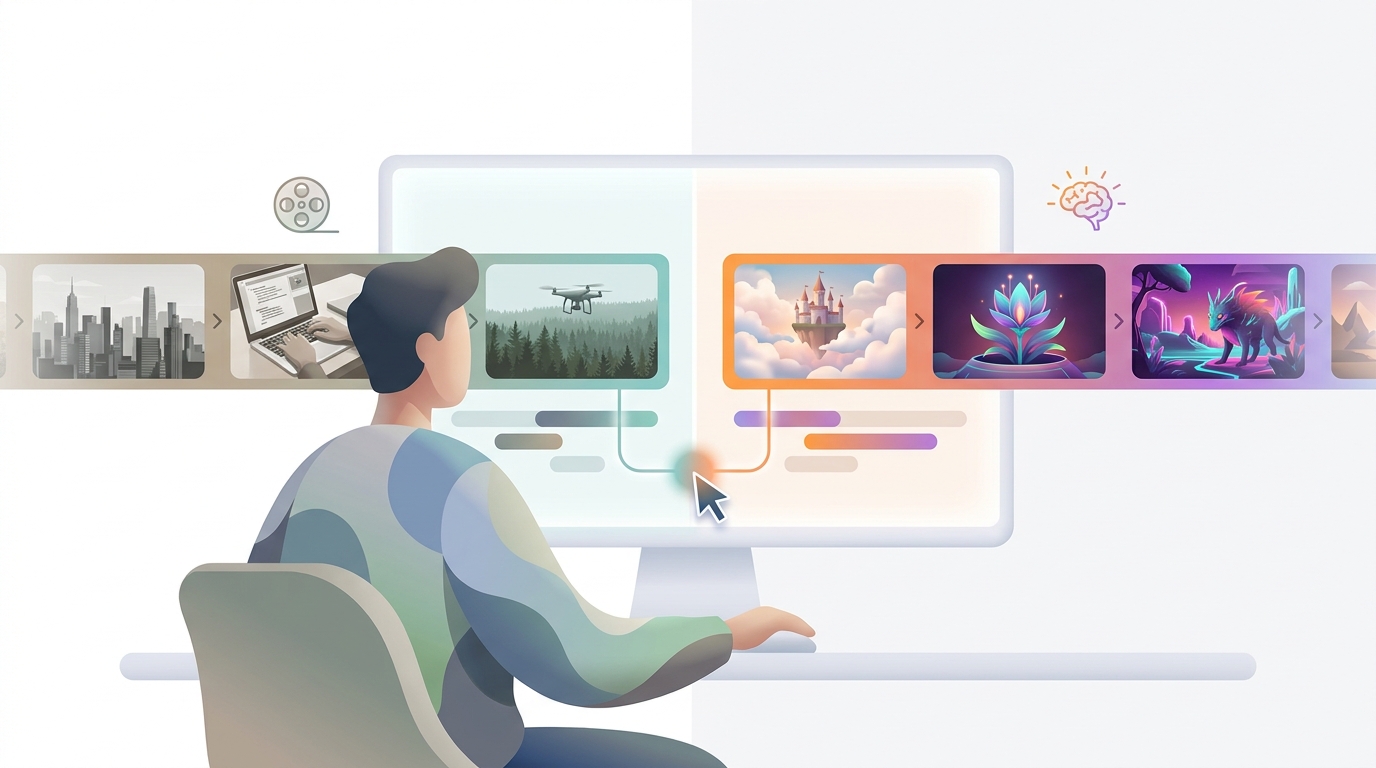
Stock Footage vs AI Visuals for Faceless Videos
Compare stock footage and AI visuals for faceless videos, including engagement, viewer trust, and YouTube, TikTok, and Vimeo labeling rules.

How to Boost Retention on YouTube Shorts
Improve YouTube Shorts retention with stronger hooks, concise pacing, interactive prompts, and metrics that account for the 2025 views change.