

The best TikTok video hooks make a specific promise, create an information gap, and show the viewer why staying is worthwhile within the first second. Start with a visible result, surprising claim, useful problem, or direct challenge; reinforce that opening with on-screen text and a visual change; then deliver the promised payoff without a long introduction.
Key takeaways:
- TikTok hooks should begin in the first second: SMMNut reports that this lifted 2–3-second retention from 63% to 81% in its analysis.
- TikTok viewers make an immediate decision: Ironlight Labs reported a typical TikTok attention span of 0.9 seconds.
- Two hook channels, such as a visual plus on-screen text, can produce 14 times the reach of the lowest-performing channel combinations, according to The Content Labs.
- Videos longer than one minute generated 43.2% more reach than 30–60-second TikTok clips in Buffer’s analysis.
- Project or product showcase openings averaged 6,037 views in OpusClip’s TikTok hook research.
The 15 formulas below are ranked by their ability to make the video’s value obvious immediately, create a reason to continue watching, and work across faceless formats. Test one formula per video rather than combining several competing promises.
1. How can I craft the perfect opening for my TikTok video?
A strong TikTok opening names a clear payoff and begins before the viewer can swipe, ideally in the first second. SMMNut found that starting the hook in the first second increased 2–3-second retention from 63% to 81%, while Ironlight Labs reported a typical TikTok attention span of 0.9 seconds, making slow logos, greetings, and scene-setting costly (SMMNut’s hook analysis; Ironlight Labs report).
Use one of these opening formulas when the promise is real and the video can prove it:
- “Stop doing [common mistake] if you want [result].” Example: “Stop using vague captions if you want people to finish your videos.”
- “I tested [thing] so you don’t have to.” Best for comparisons, tools, workflows, and experiments.
- “The reason your [result] is not happening is…” Best for educational correction videos.
- “Here is exactly how I [specific result].” Use only when you can show the method.
- “Nobody tells beginners this about [topic].” Follow immediately with the overlooked detail.
- “Watch what happens when…” Put the outcome or process on screen at frame one.
- “If you are [audience], save this.” Make the audience narrow enough to feel personally relevant.
- “The before-and-after is the surprising part.” Show both states early.
Write the hook as a single sentence. Then check whether a muted viewer can understand the promise from the first frame. For more starting points, browse a free video hook library and adapt the structure to your actual insight rather than copying claims you cannot support.
A practical opening sequence
Open with the result or tension first, add a seven-to-ten-word text overlay, and begin the explanation immediately. For example: “This 10-second edit fixed my boring product clips” can open on the finished clip, show the sentence on screen, and cut directly to the first edit. The voiceover, text, and visual all communicate one promise instead of introducing three separate ideas.
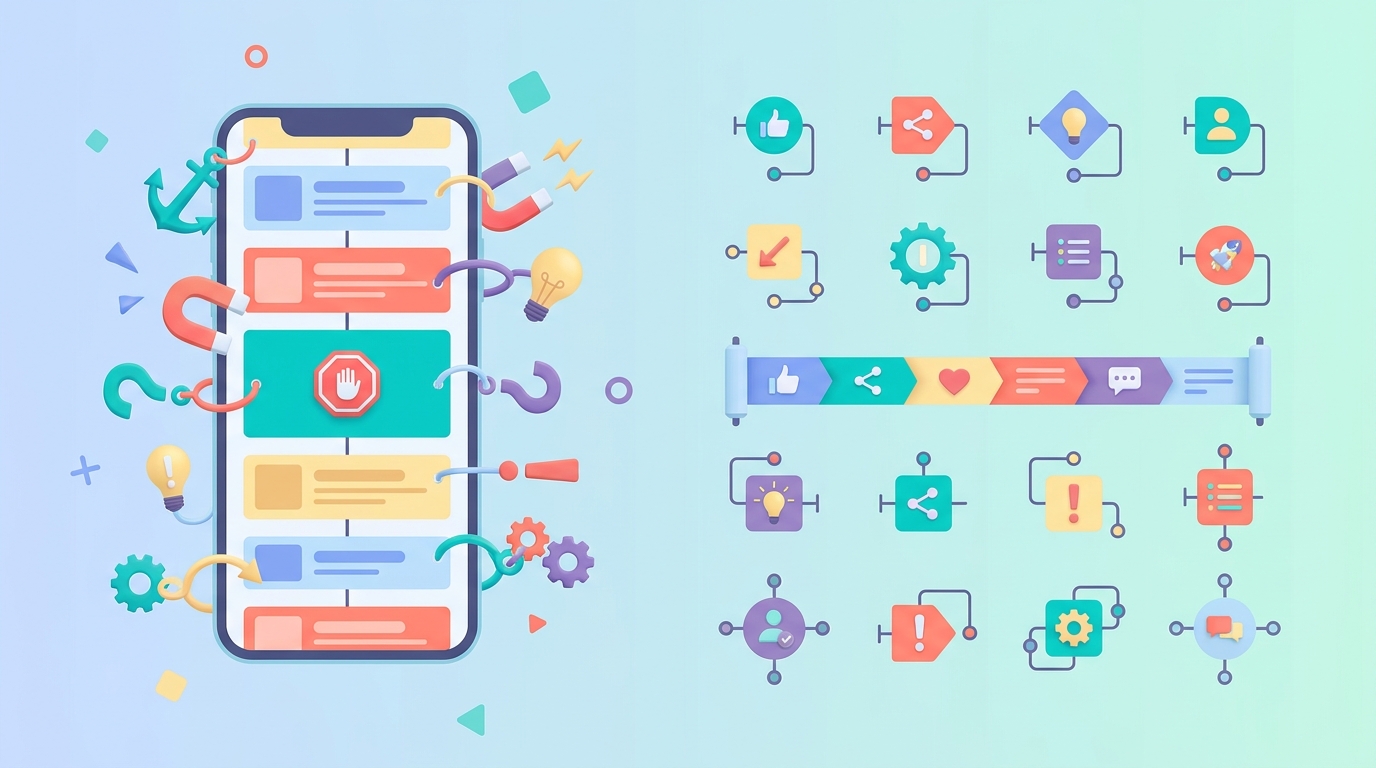
2. What video length should I aim for to maximize TikTok engagement?
TikTok video length should match the amount of proof needed to fulfill the hook, not an arbitrary short-form rule. Buffer’s analysis found that TikTok videos longer than one minute achieved 43.2% more reach than 30–60-second clips, which means a useful tutorial, story, or demonstration does not need to be compressed just to stay under a minute (Buffer’s TikTok length analysis).
Use a short video when the payoff is one clear observation: a quick reveal, a single tip, a visual transformation, or one sharp comparison. Use a longer-than-one-minute video when viewers need steps, context, proof, or a conclusion to trust the promise. A hook such as “Here are three mistakes ruining your tutorial retention” naturally needs three examples and a close; cutting it to 15 seconds can make the claim feel rushed.
The opening must still earn attention at the same speed. A 90-second video cannot spend its first 10 seconds explaining what it will cover. Start with the most useful or surprising point, then use a simple progression:
- 0–1 second: state or show the result.
- Next few seconds: explain why the viewer should care.
- Middle: demonstrate the steps, evidence, or contrast.
- Final beat: give the conclusion, checklist, or next action.
Treat length as a delivery decision. If the promised value is complete in 20 seconds, end at 20 seconds. If the promise requires a full walkthrough, keep the structure moving and let the video run longer.
3. How do on-screen text and visual cues boost video performance?
On-screen text and visual cues boost TikTok performance by letting viewers understand the video even when audio is unavailable or delayed, while giving the opening more than one way to communicate value. The Content Labs found that using two hook channels, such as visual plus on-screen text, can increase reach by 14 times compared with the lowest-performing combinations (The Content Labs analysis).
A hook channel is one route by which the viewer receives the opening idea. The most practical channels are spoken words, on-screen text, and the visual action. Use at least two, but make them agree. If the voice says, “This is why your videos lose viewers,” the text might say “Retention mistake #1,” while the visual shows a retention graph falling or an example clip being cut. The viewer receives one coherent message three times, not three competing messages.
For faceless videos, visuals need not mean a person speaking to camera. Use screen recordings, animated diagrams, close-ups of objects, timeline edits, before-and-after frames, relevant stock footage, or a text-led sequence. Keep text readable: one main thought per screen, a high-contrast treatment, and enough screen time to read it without pausing.
Avoid captions that merely repeat every spoken word in the opening. Instead, use the text overlay to state the benefit or tension. Voiceover can then add the detail: text says “Your hook is too late,” while narration says, “If the point arrives after the first second, many viewers have already decided to leave.”
4. What common mistakes should I avoid in my TikTok hooks?
The most damaging TikTok hook mistakes are delayed value, vague promises, mismatched visuals, and payoffs that do not match the opening claim. TikTok viewers have little patience for an introduction because Ironlight Labs measured typical attention at 0.9 seconds; every opening frame should therefore clarify the topic, tension, or outcome (Ironlight Labs report).
Avoid these mistakes:
- Starting with “Hi, guys” or a channel introduction. Replace it with the result, problem, or surprising observation.
- Using a broad promise. “This will change your life” gives no reason to believe or continue. “This caption format makes tutorial steps easier to follow” is specific.
- Hiding the visual proof. If the video is about a transformation, show a glimpse of the transformation in the opening.
- Making the hook about yourself rather than the viewer. “I was bored last night” is weaker than “This is the fastest way to turn one idea into five posts.”
- Changing the subject after the hook. A hook that promises three examples must deliver three examples.
- Packing in too many claims. One video should answer one core question.
- Using an unreadable text overlay. Small text, crowded copy, and low contrast turn a second hook channel into friction.
A useful quality check is to remove the sound and watch the first second. Then cover the text and watch again. Each version should still make the topic understandable. If neither can stand alone, the opening needs a clearer visual or sentence.
5. How quickly should my TikTok hook engage viewers?
TikTok hooks should engage viewers in the first second, not after an introduction, because early retention changes quickly at the start of the feed experience. SMMNut reports that hooks beginning within the first second raised 2–3-second retention from 63% to 81%, and Ironlight Labs places typical TikTok attention at 0.9 seconds (SMMNut; Ironlight Labs).
Think in frames rather than sentences. The first frame should show one of four things: the outcome, the problem, the contrast, or an unexpected detail. A productivity video can begin with a cluttered task list and the text “This is why your to-do list never gets done.” A recipe video can begin with the finished dish and “The one step that stops this sauce splitting.” A business video can begin with a dashboard screenshot and “This metric can make a good campaign look bad.”
Do not confuse speed with shouting or frantic edits. Immediate engagement means immediate clarity. A calm visual can work if the viewer instantly understands why it matters. Use a short pause only after the central promise is clear, such as a close-up of the final result before explaining the method.
Build a repeatable editing rule: cut anything that does not strengthen the promise before the first useful point. Logos, animated intros, and generic background footage may fit a brand identity, but they should not precede the hook.
6. What are the top-performing TikTok hook styles?
Project and product showcase hooks are among the strongest TikTok hook styles when the video can show a concrete outcome, because OpusClip’s research found that the “Project/Product Showcase” category averaged 6,037 views and outperformed the hook types it analyzed (OpusClip’s engagement benchmarks). The best style still depends on whether the creator has a visible result, a useful lesson, or a compelling story to deliver.
Use these styles as a selection guide:
| Hook style | Formula | Best use |
|---|---|---|
| Project or product showcase | “I made this using…” | Design, crafts, software, products, portfolios |
| Before-and-after | “From this to this in…” | Transformations, edits, makeovers, workflows |
| Mistake correction | “You are doing [task] wrong if…” | Education and how-to content |
| Curiosity gap | “The detail everyone misses is…” | Explainers and niche insights |
| Experiment | “I tried [method] for [purpose].” | Reviews, tests, and personal case studies |
| List promise | “Three ways to…” | Tutorials with distinct actionable points |
| Contrarian insight | “You do not need [common tactic] to…” | Advice that challenges a familiar assumption |
Choose a showcase opening when you can visibly prove the result. Choose a mistake or list opening when the value is educational. For faceless production, one way to keep spoken, visual, and text hooks aligned is to use an AI-driven workflow such as GoFaceless to plan the script, captions, and supporting visuals around the same opening promise.
7. How do TikTok's policies influence hook strategies?
TikTok policies influence hook strategy by requiring creators, especially commercial creators, to make attention-grabbing claims that remain clear, accurate, and supported by the video itself. TikTok’s official creator-commercial guidance is explicitly framed as the “Content Quality Standard for Creator Commercial Content” and should be reviewed before publishing promotional material (TikTok Content Quality Standard).
The practical rule is simple: do not use a hook that the video cannot substantiate. A misleading “You need this” opener may attract a tap, but it creates a poor viewing experience if the product, result, price, or claim is not clearly shown. For commercial content, identify what is being promoted, show the relevant product or service accurately, and avoid claims that overstate outcomes.
Keep hooks specific without implying certainty you cannot prove. Replace “This guarantees viral videos” with “This gives your opening a clearer visual payoff.” Replace “The only tool you need” with “One way to organize your workflow.” If a result depends on skill, audience, timing, or testing, present the process rather than promising a universal outcome.
Policy-aware hooks are usually better hooks anyway. They set a precise expectation, give viewers a fair reason to stay, and make the eventual payoff easier to understand. Review TikTok’s current guidance whenever a video includes branded products, affiliate-style promotion, or commercial claims.
Put one hook into practice
Choose one formula, write three variations, and publish the version whose first frame communicates the payoff without sound. If you want a faster way to turn a tested topic and hook into a faceless video, try GoFaceless as one workflow option for coordinating the script, voiceover, visuals, and captions.
Sources & further reading
Keep reading
How 3–7 Second Videos Perform for Engagement
Data-backed analysis of how 3–7 second videos perform on viewability, sharing, conversion, messaging, and algorithm signals.
Best AI Video Generators for Faceless Videos in 2026
Compare AI video generators for faceless Shorts, Reels, and TikToks by automation, render reliability, speed, and documented costs.
How to Improve YouTube Shorts Retention: A Practical Plan
Use this step-by-step YouTube Shorts retention plan to diagnose swipe-aways, fix drop-offs, test stronger hooks, and improve each new video.