

Hook viewers in the first two seconds of a TikTok or YouTube Short by showing a clear outcome or tension immediately, pairing it with a visual that proves the claim, and cutting every intro, logo, and delay. Make the first frame understandable without sound, then test multiple openings against the same core video to find the one that earns continued viewing.
Key takeaways:
- TikTok creators can treat a 35–40% hook rate as good and 40%+ as elite, according to Hook Layer’s hook-rate guide.
- TikTok viewers commonly decide whether to continue within 0.9 seconds, according to the Iron Light Labs TikTok report.
- TikTok distribution can be influenced by viewing behavior at roughly the 1.5-second mark, according to Lemonlight.
- For YouTube Shorts, the opening 2–3 seconds are crucial to retention success, according to GrowCreator.
Prerequisites: Start with one audience, one video promise, one supporting visual, and a version of the video with no greeting or branded intro.
Realistic total time: allow 30–45 minutes to write three openings, edit them onto the same body, publish, and record the early retention result.
What are the hook rate benchmarks for TikTok videos?
TikTok hook rate measures the share of viewers who remain after the opening moment, so it is a practical way to judge whether an opening earns attention before the rest of the video can work. Hook Layer classifies a 35–40% TikTok hook rate as good and 40% or more as elite. Use those ranges as a directional benchmark, not a reason to copy another creator’s style: the strongest hook is the one that accurately earns the next second from your specific audience.
- Write one visible promise for frame one. Require a result, mistake, contrast, or unresolved question that a viewer can understand at a glance. For example: “Your captions may be hiding the point” paired with a caption obscuring a key word. It worked when someone can state the video’s promise after watching with sound off.
- Create three hook variants for the same video body. Require only the opening line, first shot, and on-screen text to change; keep the payoff and topic constant. It worked when the comparison isolates the opening rather than changing the entire production.
- Log the hook rate beside the exact opener. Require a simple note naming the first frame and opening words. It worked when you can identify recurring winning patterns, such as before-and-after proof or a specific error, rather than guessing from memory.
How does viewer retention impact YouTube Shorts?
Viewer retention in YouTube Shorts shows where viewers continue watching and where they leave, making it the clearest editing signal for an opening that does not land. GrowCreator’s YouTube Shorts retention guide identifies the first 2–3 seconds as crucial to retention success, while VidIQ advises creators to deliver the hook in the first second. A steep opening drop means the video needs a clearer promise or faster proof, not a longer introduction.
- Put the evidence before the explanation. Require a revealing clip, a visible result, a bold contrast, or the final state in the first second. A cooking Short can show the finished texture before explaining the ingredient. It worked when the first frame gives a reason to stay even if the viewer never hears the voiceover.
- Match the promise to the next shot. Require the first spoken claim and the next visual to describe the same subject. If the line says “three editing mistakes,” show mistake one immediately rather than an unrelated montage. It worked when the opening does not create a false expectation that causes a drop after the hook.
- Inspect the earliest retention curve after publishing. Require a note of the exact second where viewers fall away and the visual or line playing there. It worked when the next edit makes one deliberate change at that moment instead of adding random effects.
Why is the first second crucial for video engagement?
The first second is crucial because TikTok viewers often decide whether to keep watching within 0.9 seconds, according to the Iron Light Labs TikTok report. That leaves almost no room for greetings, context-setting, or a delayed reveal. The first frame must communicate the topic and the reward at once: show the problem, the transformation, the unusual detail, or the answer the viewer wants to verify.
- Delete the preamble. Require every opening word to advance the promise. Replace “Today I’m going to show you…” with “This one cut makes product videos easier to follow.” It worked when the first line still makes complete sense after removing the first sentence of the original script.
- Use an action-led first frame. Require movement that relates to the claim, such as a hand covering then revealing a result, a fast before/after switch, or a cursor changing a visible setting. It worked when a paused first frame still explains the topic without relying on a title card.
- Make sound optional, not irrelevant. Require readable on-screen text that repeats or sharpens the spoken hook. Keep the text to one idea, not a paragraph. It worked when the silent version makes the same promise as the voiced version.
What strategies can increase early engagement on TikTok?
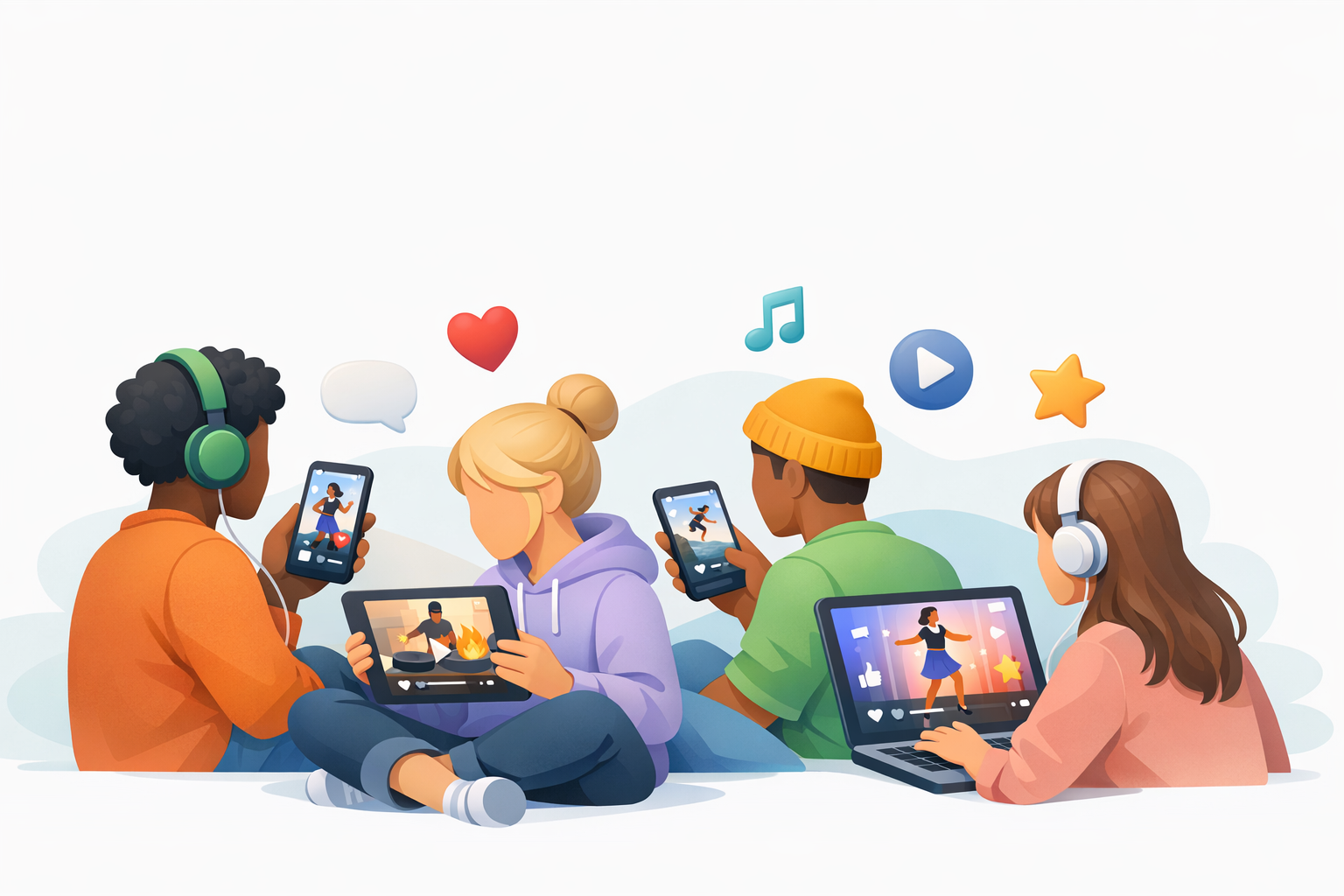
Early TikTok engagement improves when the opening asks viewers to process one clear idea and gives them a low-friction reason to react, comment, or keep watching. The practical strategy is not to demand engagement with “like and follow” in frame one; it is to create a specific, credible tension that the video resolves. TikTok creators can use a direct question, a surprising contrast, a mistake demonstration, or a result-first reveal, then place the evidence immediately after it.
- Choose one hook pattern that fits the footage. Require the opening to be truthful to the payoff. A direct question works for advice (“Why do your Shorts lose viewers here?”); a result-first reveal works for a transformation. It worked when the video can answer the opening naturally without a topic switch.
- Use a question viewers can answer from experience. Require a narrow prompt, such as “Do you write the hook before choosing the footage?” Avoid broad prompts like “What do you think?” It worked when likely comments concern the exact choice or problem shown in the video.
- Build a swipe file from tested patterns. Require a record of the wording, visual device, topic, and outcome of your own posts. A free hook library can help generate starting structures, but rewrite each one for the claim you can prove. It worked when every saved hook includes the footage or proof it needs.
How does TikTok's algorithm affect video visibility?
TikTok visibility depends in part on whether early viewers continue watching, which makes the opening a distribution input as well as a creative choice. Lemonlight reports that TikTok makes a distribution decision around the 1.5-second mark. A creator cannot control every visibility factor, but a creator can control whether the opening is instantly legible, relevant to the audience, and followed by the proof it promises.
- Design for the first 1.5 seconds, not for a delayed reveal. Require the core subject to appear immediately in the video and the on-screen text. If the video teaches a spreadsheet shortcut, show the spreadsheet shortcut in frame one. It worked when viewers do not need to wait for a scene change to learn the topic.
- Avoid misleading curiosity. Require the payoff to be connected directly to the claim. “I changed one thing” only works if the viewer can see what changed soon after. It worked when early retention does not collapse at the point where the video finally explains its premise.
- Keep audience signals clean. Require a focused topic and a single viewer problem per Short. A video about camera framing should not turn into a general creator-motivation clip halfway through. It worked when the caption, visuals, voiceover, and comments all describe the same viewer need.
What is the ideal content structure for a short-form video?
An effective short-form video structure is hook, proof, explanation, payoff, and next action. The hook makes a precise promise in the first second; proof makes that promise believable; explanation delivers only the steps needed to understand it; payoff closes the loop; and the next action gives the viewer one relevant choice. This structure protects pacing because every shot has a job and no shot exists solely to introduce the creator or decorate the edit.
- Script the hook and payoff before the middle. Require one sentence for the promised result and one visual or line that proves it at the end. For example, open with “This visual change makes tutorials easier to scan,” then finish by showing the improved version. It worked when the ending answers the exact opening claim.
- Put proof directly after the hook. Require a demonstration, screenshot, comparison, or specific example before giving background. It worked when a viewer can believe the claim within the opening moments rather than being asked to trust a long explanation.
- End with one next action. Require a CTA that matches the video, such as saving a checklist, trying one edit, or watching a related lesson. Topic research from faceless-video ideas by niche can help keep follow-up videos connected. It worked when the next action feels like the natural continuation of the payoff, not an interruption.

How do YouTube Shorts' policy updates affect content strategy?
YouTube Shorts policy and format changes should affect production planning, but they do not remove the need for an immediate hook. The official YouTube Help documentation states, “You can upload vertical videos that are 3 minutes or less.” That wider runtime allowance gives creators room for a deeper explanation, but a longer Short still needs a clear first-second promise and a paced sequence of proof.
- Check the official format guidance before changing your workflow. Require the current YouTube Help page, not recycled creator advice, when planning duration or upload format. It worked when your planned video length and orientation match the documentation that applies at publication time.
- Use additional runtime only when the payoff needs it. Require each added section to deliver a new proof point, example, or useful step. Do not stretch a 20-second idea into a longer Short with pauses. It worked when the ending provides a stronger answer than the opening could provide alone.
- Maintain one opening standard across platforms. Require the first frame to communicate the subject and reward on both TikTok and YouTube Shorts, then adapt the caption and pacing after reviewing each platform’s results. It worked when platform-specific edits respond to observed viewer behavior rather than assumptions.
Turn the two-second rule into a repeatable workflow
Use one repeatable opening workflow: choose a promise, show proof in frame one, cut the preamble, and compare three versions against the same video body. One way to produce and test those variants quickly is to use GoFaceless to generate faceless-video openings with scripts, voiceover, visuals, and captions, then revise the first frame before publishing. Start your workflow with a GoFaceless signup when you are ready to turn a tested hook into a finished Short.
Sources & further reading
Keep reading

Ideal Short-Form Video Posting Frequency
Post 2–3 short-form videos weekly, then use YouTube and TikTok analytics to adjust cadence without sacrificing quality.

How to Use Pattern Breaks in Short-Form Videos
Use pattern breaks to hold attention on TikTok, Reels, and Shorts with a practical timing, hook, and retention-testing workflow.
AI Content Disclosure Rules for Creators in 2026
Learn the 2026 AI content disclosure rules for TikTok and the EU AI Act, plus a practical cross-platform compliance workflow.