

More than 1 million channels used YouTube AI tools daily by December 2025, according to YouTube’s official 2026 future-of-YouTube announcement. That is a platform-scale adoption milestone: AI assistance is no longer limited to experimental creator workflows. It does not, however, mean that 1 million individual creators made fully AI-generated videos every day, that every channel used the same feature, or that AI use automatically improved views, revenue, or audience trust. The practical takeaway is narrower: creators are using AI somewhere in production, while the final upload still needs original direction, factual review, appropriate disclosure, and compliance with YouTube’s authenticity expectations.
Key takeaways:
- More than 1 million YouTube channels used YouTube AI creation tools daily in December 2025, making AI-assisted production a mainstream creator workflow rather than a niche experiment.
- YouTube’s reported milestone is channels, not individual people: one creator can operate more than one channel, so “1 million creators” is useful shorthand but not the precise measurement.
- YouTube removed 16 AI-driven channels affecting more than 35 million subscribers under stricter inauthentic-content enforcement, according to YouTube’s 2026 update.
- The EU AI Act adds transparency obligations for AI-generated or manipulated media distributed to EU audiences, so disclosure should be designed into the publishing workflow rather than added at the last minute.
- AI can increase output, but it cannot supply a channel’s distinct point of view, factual judgment, or responsibility for what gets published.
What do YouTube AI tools usage statistics actually show?
YouTube’s statistic shows that more than 1 million channels used YouTube AI tools daily in December 2025; it shows adoption of YouTube AI tools at the channel level, not the quality or commercial outcome of AI-assisted videos. YouTube states, “more than 1 million channels used YouTube AI tools daily by December 2025,” in its official 2026 future-of-YouTube announcement. That is a verbatim statement from YouTube, the platform and primary source reporting the metric. For creators, it is evidence that AI assistance has become a normal part of making videos rather than a separate content category.
The wording of the metric matters. “Channels” is the unit counted, so the number cannot be converted directly into a count of unique people or businesses. A creator operating two channels could contribute two channels to the total. “Daily” indicates activity measured on a day-by-day basis, but YouTube’s cited announcement does not explain whether every counted channel used a tool on every day of December, whether the figure is an average or peak daily count, or the minimum action required to qualify as use.
The announcement also does not break the number down by feature category. It does not tell readers how many channels used planning assistance, generative visuals, editing support, accessibility features, or another AI capability. Nor does it say whether a channel used AI for one small task, such as developing an idea, or for several production stages. Treat the number as a broad adoption signal—not evidence that a particular feature, workflow, or degree of automation is responsible for channel growth.
Method and sample
This analysis is based on one official platform announcement published by YouTube in 2026 that reports daily AI-tool activity for December 2025. The review extracts the stated adoption milestone, the cited enforcement context, and the creator implications of transparency rules. It does not estimate viewer satisfaction, revenue, watch time, or the percentage of videos made with AI because the source does not publish those figures.
| Evidence reviewed | Figure or date | Practical meaning for creators |
|---|---|---|
| Daily use of YouTube AI tools | More than 1 million channels, December 2025 | AI-assisted creation is established at platform scale. |
| AI-driven channels removed under enforcement | 16 channels | Repetitive or inauthentic production can create meaningful channel risk. |
| Subscribers affected by those removals | More than 35 million subscribers | Large audiences do not protect channels that violate policy. |
The main limitation is important: this is a platform-reported usage count, not an independent survey of creators. It does not identify which AI feature each channel used, how often each channel published, whether the channels were unique owners, or whether AI use caused growth. It also does not establish that every video from a counted channel was AI-assisted. Treat the statistic as evidence of adoption, not a benchmark for how much automation your own channel needs.
A useful way to apply the statistic is to separate three questions that the number cannot answer for you: what task is slowing production, what degree of assistance is appropriate for that task, and what editorial review is needed before publication? Those questions turn a broad platform number into a practical workflow decision.
What are the most popular AI tools available on YouTube?
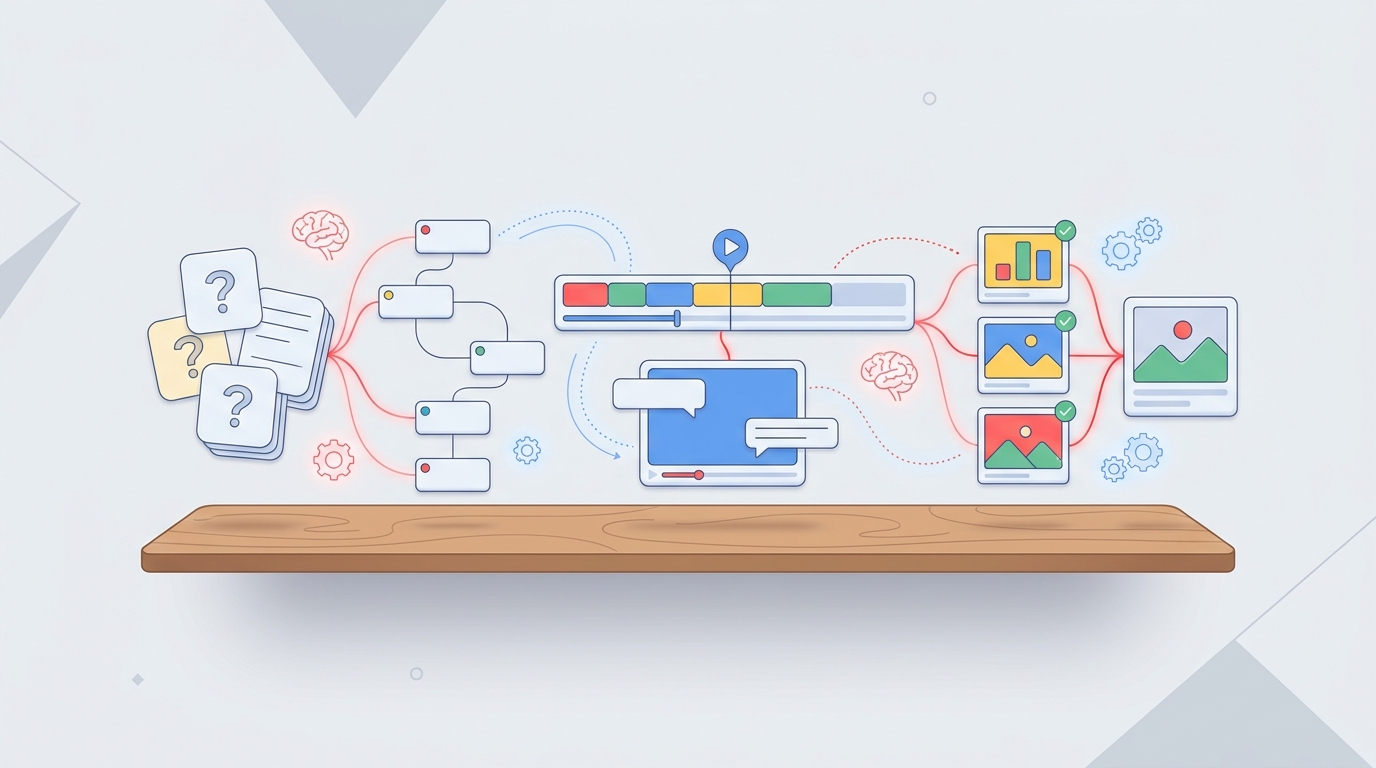
YouTube’s cited 2026 announcement does not publish a ranked list of named AI tools or feature-level usage totals, so no source-backed claim can identify a single “most popular” YouTube AI feature from this statistic alone. The supported answer is functional rather than brand-ranked: creators use AI assistance for idea development, visual generation or transformation, editing support, language and accessibility work, and packaging decisions. These are the production bottlenecks a creator can evaluate without pretending the 1 million-channel figure ranks individual tools.
| AI workflow category | Specific creator problem it addresses | What to review before publishing |
|---|---|---|
| Idea development | Turning one audience question into distinct angles and an outline | Whether the angle is accurate, specific, and genuinely useful to the intended audience |
| Visual generation or transformation | Explaining an abstract point with an illustrative scene, diagram, background, or transformation | Whether the visual falsely suggests real footage, a real event, or a real person’s actions |
| Editing support | Reducing repetitive trimming, sequencing, and assembly work | Pacing, transitions, continuity, and whether the edit changes the meaning of a claim |
| Language and accessibility support | Improving captions, clarity, or access for another audience | Names, terminology, captions, translation choices, and intended meaning |
| Packaging assistance | Drafting possible titles, descriptions, or thumbnail directions | Whether the final package accurately represents what viewers will receive |
For planning, use AI to expand a clear audience question into several distinct video angles. For production, use AI-generated or AI-assisted visual elements only when they support a specific narrated point. For packaging, use AI suggestions as options to evaluate—not as final titles, descriptions, or thumbnails to publish unchanged.
A useful selection rule is to choose a tool by bottleneck, not novelty:
- Idea bottleneck: Generate angles, counterarguments, and a structured outline from a topic you already understand.
- Visual bottleneck: Create an illustrative scene, background, or transformation that makes an explanation easier to follow.
- Language and accessibility bottleneck: Improve clarity, captions, or audience access while preserving the intended meaning.
- Editing bottleneck: Use assisted trimming or sequencing, then manually inspect pacing, factual claims, and transitions.
Native tools are convenient because they sit near the publishing workflow. External tools remain useful where you need a different production format, deeper editing control, or a complete pipeline. The decision should be based on control, rights, disclosure needs, and the review time required—not on whether a feature carries an AI label. A tool that saves ten minutes but produces captions requiring twenty minutes of correction is not necessarily solving the real bottleneck.
How do AI tools benefit YouTube creators?
AI tools benefit YouTube creators most clearly when they reduce repeatable drafting and assembly work while leaving research, editorial choices, and final approval with the creator. The more than 1 million channels using YouTube AI tools daily in December 2025 figure suggests that creators find assisted workflows practically useful. It does not prove that AI itself raises performance; the benefit comes when saved production time is reinvested in clearer storytelling, better source checking, and more deliberate iteration.
For a faceless explainer channel, an effective workflow might look like this:
- Start with one audience problem, such as “Why did this product change?”
- Ask an AI tool for five possible narrative structures, then choose one with a defensible source trail.
- Write the opening around the answer and stakes, rather than a generic introduction.
- Build visuals that advance each sentence instead of filling silence with unrelated clips.
- Review captions, names, dates, claims, and the first 30 seconds before export.
- Compare audience response across several videos before changing the channel format.
The benefit in that example is not that AI selected a topic or made a video unattended. It is that the creator can test several structures before committing to one, then spend human attention where errors are most costly. A generated outline may reveal a missing counterargument. A draft caption pass may expose a name that needs checking. A rough sequence may show that a visual explanation is more useful than another paragraph of narration.
AI also makes it cheaper to explore a format before committing to a full production process. That is especially useful for creators moving from occasional uploads to a sustainable schedule. But do not confuse volume with a content strategy. A clear hook, a specific audience promise, and a recognizable editorial lens remain the differentiators. Creators who need more opening angles can test ideas with a free library of 3,500+ proven video hooks, then adapt the structure to their own subject matter.
The non-negotiable review step is human judgment. Check for fabricated facts, generic wording, misleading edits, awkward captions, and visual choices that imply something did not happen. AI can shorten the first draft; it cannot take responsibility for the final upload, answer a viewer’s correction, or repair trust after an avoidable mistake.
What are some innovative uses of AI in video creation?
Innovative AI use in video creation means applying automation to a defined editorial constraint—not simply producing more interchangeable clips. A channel can use AI to explain one difficult concept visually, adapt one researched topic into several distinct formats, or turn original source material into a coherent story. YouTube’s million-channel daily-use milestone establishes broad adoption, while its enforcement context shows why automation needs to remain connected to original research, commentary, or storytelling.
Consider these practical formats:
- Visualized explanations: Turn a difficult process into a sequence of diagrams, symbolic scenes, and concise narration. Each visual should answer a question in the script.
- Multi-format story development: Use one researched long-form topic to plan a full explainer, several Shorts with separate hooks, and a follow-up that addresses common objections.
- Localized educational videos: Adapt language and captions for a new audience, then have a fluent reviewer check terminology, examples, and cultural meaning.
- Archive-to-story transformation: Convert a creator’s original notes, interviews, screenshots, or footage into a coherent narrated story while maintaining the source context.
- Rapid concept testing: Produce rough, clearly internal drafts to compare story order, pacing, and visual metaphors before making the final version.
A worked example makes the distinction clearer. A creator with original interview notes about a product change could use AI to propose three story orders: timeline first, customer problem first, or decision-maker rationale first. The creator then verifies the facts against the notes, chooses one order, marks illustrative visuals as illustrations where needed, and publishes a narrated explanation containing their own analysis. That differs materially from asking for a generic product-change script and pairing it with unrelated stock-like clips.
The boundary is originality. YouTube’s enforcement action against 16 AI-driven channels affecting more than 35 million subscribers is a reminder that scale does not make low-value repetition safe. The cited update provides the removal count and subscriber impact, but it does not establish that every AI-assisted channel is inauthentic or that AI alone caused these removals. The sound conclusion is narrower: creators should not assume an automated, repetitive format is protected merely because it has an audience.
Build a repeatable format around research, commentary, curation with context, or original storytelling. If a video could be published unchanged by hundreds of channels, it needs more creator input. For faceless channels, the strongest innovation is often production-system design: a reliable way to move from topic to script, narration, visuals, captions, and review without losing the channel’s voice. Learn the distinction between reusable production efficiency and repetitive output in YouTube’s inauthentic content policy guide.
Are these AI tools free to use?
The available source does not support a universal claim that YouTube AI tools are free: YouTube’s 2026 announcement reports more than 1 million channels using AI creation tools daily by December 2025, but it does not provide a complete pricing table, country-by-country availability, or account-level access rules. Creators should therefore treat price and availability as details to verify in the product they plan to use, rather than assumptions drawn from the adoption statistic.
Cost is also more than a subscription question. A tool can appear free while still creating costs in revision time, rights checks, export limitations, or the need to combine several separate services. A workflow that creates a draft quickly but requires extensive correction may cost more than a paid workflow with usable review controls. Equally, a paid tool does not remove the creator’s responsibility to verify claims or handle disclosures.
Before adopting any AI workflow, answer these questions:
- What output can the tool create, and what must you still make manually?
- Can you review and revise the script, voiceover, visuals, captions, and music before publishing?
- Are usage rights clear for your commercial channel?
- Does the tool preserve project files or export in the aspect ratios you need?
- What disclosure or labeling step will your workflow require?
- If an output is inaccurate or unsuitable, can you replace the affected element without rebuilding the whole video?
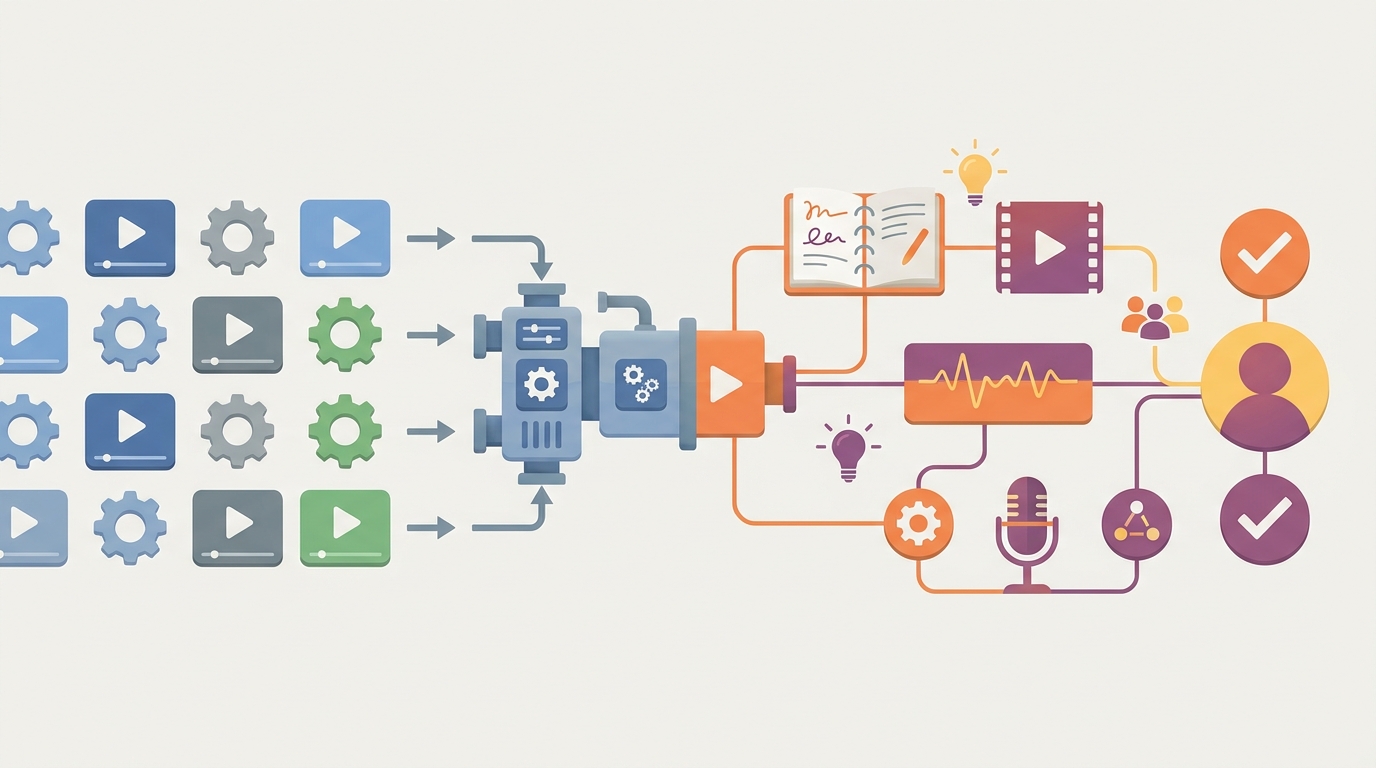
A creator who needs individual assists may prefer native tools and manual editing. A creator making frequent short-form videos may prefer a single production system. GoFaceless, which is our own product, is one option for that latter workflow: it turns a topic, brief, or reference into a finished short-form video with an AI script, voiceover, visuals, captions, and music, while keeping preview and export controls. It is designed for TikTok, Reels, and YouTube Shorts in vertical and 16:9 formats.
Whatever your stack, budget for review rather than assuming AI eliminates labor. The most expensive mistake is publishing a video that needs a correction, damages audience trust, or creates a policy problem.
How has AI impacted content diversity on YouTube?
AI can expand the range of videos creators can make by lowering some production barriers for explainers, multilingual formats, visual storytelling, and channels whose creators do not want to appear on camera. It can also make feeds feel less diverse when many channels reuse the same script patterns, synthetic voices, visual clichés, and topic choices. The important distinction is between more uploads and more distinct editorial contributions.
YouTube’s cited response—removing 16 AI-driven channels with more than 35 million subscribers affected—shows that access to automation does not override the need for authentic, valuable content. The reported numbers establish that enforcement affected channels with substantial combined subscriber reach. They do not establish a general rule that AI use reduces diversity, nor do they describe every enforcement decision. They are instead a practical warning against treating scale, audience size, or a repeatable automated pipeline as substitutes for originality.
The better measure of diversity is not the number of uploads. It is whether viewers can find genuinely different expertise, perspectives, formats, and explanations. A history channel can use AI visuals to explain an event without claiming generated scenes are archival footage. A business channel can use AI narration but still offer a founder’s real analysis. A multilingual channel can adapt a script, but should preserve local context rather than translate word-for-word.
Transparency supports that diversity because audiences can judge content on honest terms. Creators reaching EU viewers should build disclosure into their edit and publishing checklist because the EU AI Act introduces new transparency requirements for AI-generated or manipulated media. This is a workflow recommendation, not a claim that every AI-assisted video requires the same label in every circumstance or jurisdiction. For a practical publishing process, see how to label AI-generated content for EU compliance and AI content disclosure rules for video creators.
A workable checklist is specific: identify which assets were generated or materially manipulated; decide whether an illustrative visual could be mistaken for a real scene; keep captions and narration aligned with what the visuals actually show; complete any relevant platform publishing disclosures; and retain the source notes that support factual claims. That process helps a channel use AI as production assistance without obscuring what viewers are seeing.
Use a simple final test: could a viewer identify what only your channel contributes? That contribution might be your research method, original examples, an expert explanation, a distinct narrative voice, or careful curation. If the answer is no, add human editorial work before increasing output.
Ready to build an AI-assisted workflow without losing your voice?
Use AI to remove production bottlenecks, then reserve your attention for original ideas, accurate claims, transparent publishing decisions, and a format viewers can recognize. Start with GoFaceless for topic-to-video short-form production, and review every output before publishing.
Sources & further reading
Keep reading

The Role of AI Disclosure in Building Viewer Trust
Learn how YouTube AI disclosure works, when it applies, and how creators can label realistic synthetic content without weakening audience trust.

50 Faceless YouTube Channel Ideas That Actually Work
Explore 50 faceless YouTube channel ideas, ranked by repeatability, viewer value, monetization fit, and original-content potential.

The Growth of AI-Generated Shorts: What Creators Need to Know
Learn what the available 2026 AI Shorts data says about creator adoption, render time, originality, disclosure, and testing workflows.