
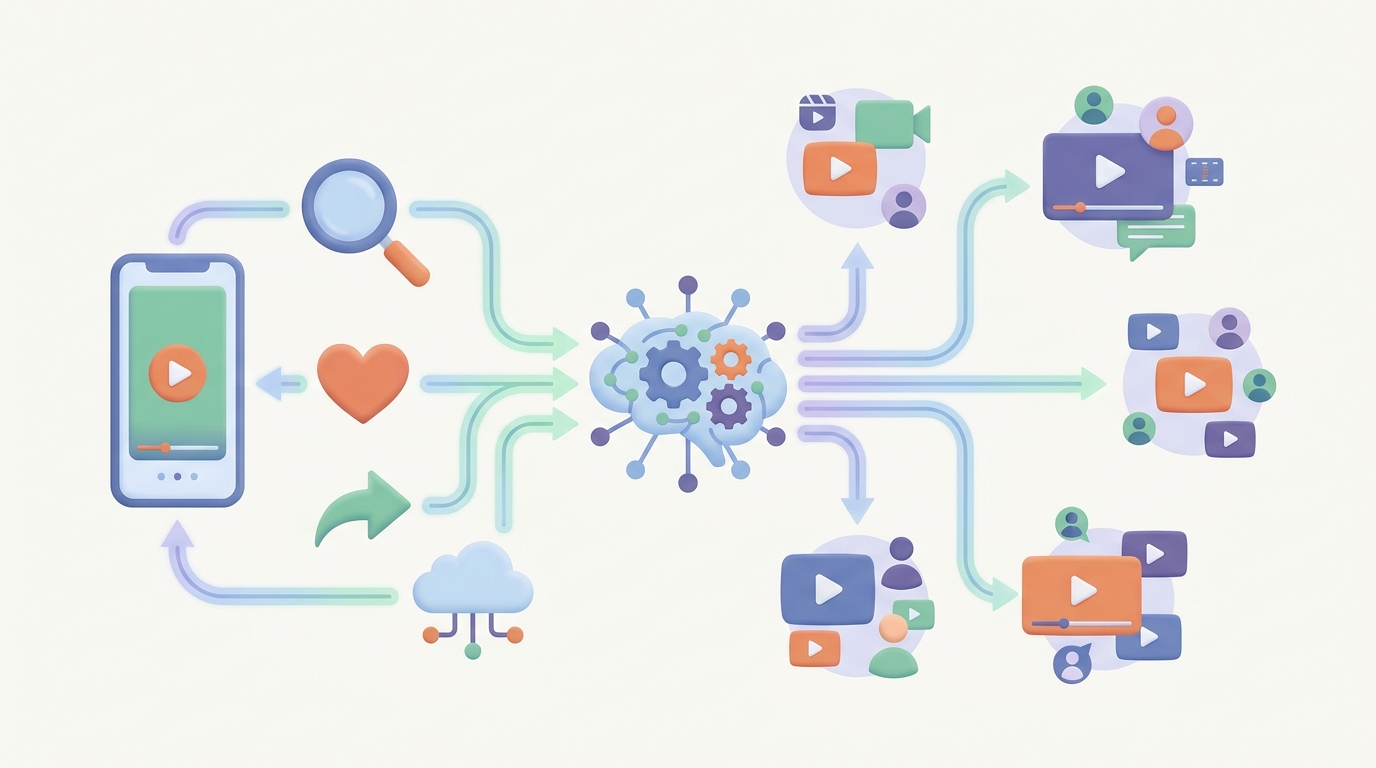
YouTube Shorts is a personalized recommendation system that matches eligible short-form videos to individual viewers using signals including watch history, likes, dislikes, and viewing behavior. A Short can earn broader distribution when the viewers who receive it choose not to swipe away, keep watching, and give positive feedback; YouTube does not publish one metric, upload trick, or fixed threshold that guarantees reach.
Key takeaways:
- YouTube says its recommendation system relies on more than 80 billion signals, including watch history and likes or dislikes, to help understand viewer preferences.
- The YouTube Shorts player uses recommendation signals similar to those used across the main YouTube experience, but the swipe-first viewing environment changes how quickly a Short must communicate its value.
- A YouTube Short is a vertical or square video that is 3 minutes or less; creators should verify the current upload requirements in YouTube’s own Help documentation before publishing.
- YouTube’s altered-or-synthetic-content rules focus on meaningful realistic material that viewers could mistake for a real person, event, or place. AI use by itself is not described as an automatic Shorts visibility penalty.
What signals drive YouTube Shorts recommendations?
YouTube Shorts recommendations are driven by personalized viewer signals rather than by a fixed checklist that every video must pass. In its recommendation documentation, YouTube Help says, “Our system relies on more than 80 billion signals to help us understand what viewers like.” The same documentation identifies watch history and likes or dislikes as examples of preference signals and explains that the Shorts player uses similar recommendation inputs to the wider YouTube experience.
The phrase “more than 80 billion signals” is useful context, but it is not a creator-facing score, a count of signals attached to one Short, or a target that a channel can optimize directly. YouTube does not say that every signal has equal weight, and it does not publish a universal formula for combining them. The practical point is narrower: YouTube has many ways to infer whether a particular viewer is likely to value a particular video.
For example, two viewers can receive very different results from the same upload. A viewer who repeatedly watches concise history explainers may be a plausible match for another history explainer. A viewer who usually swipes away from that format creates a different viewing pattern. The upload has not changed, but the audience match has. That is why a Short can produce different watch behavior across different groups of viewers.
Creators should focus on the response created by the first viewing opportunity. A clear opening establishes the subject quickly. A visual change, a question, a tension point, or a specific promise gives the relevant viewer a reason to continue. The goal is not to satisfy an imagined algorithm personality. The goal is to make the intended viewer decide that the next few seconds are worth watching.
What does Shorts distribution cost or require?
YouTube does not describe a fee that buys organic Shorts recommendations in its recommendation guidance. Organic YouTube Shorts distribution depends on an eligible format, an appropriate audience match, and the viewing response that follows; paid promotion is a separate advertising choice. Treat organic reach as earned attention rather than a product purchase: the Short needs an understandable premise, clear packaging inside the video, and viewers who choose not to swipe away.
A useful distinction is between *being eligible to appear* and *being repeatedly selected for viewers*. Format compliance addresses the first question. Viewer behavior helps answer the second. A vertical upload with weak opening clarity can be eligible for the Shorts experience without becoming a strong recommendation candidate for many viewers. Conversely, a sharply focused idea still needs to meet the relevant format requirements before creators can expect it to behave like a Short.
How does YouTube measure engagement on Shorts?
YouTube measures Shorts engagement through viewer actions that reveal relevance and satisfaction, including whether viewers watch or skip, how long they continue watching, and whether they provide feedback such as likes or dislikes. YouTube Help names watch history and likes or dislikes among the signals used to understand what viewers like, but YouTube does not publish a single public Shorts engagement score or a universal view-duration threshold.
For a creator, the useful interpretation is that a Short must earn attention repeatedly as YouTube shows it to viewers. Watch behavior matters because a video that loses viewers immediately supplies less evidence that the viewer-video match was useful. Positive actions can support the case that a Short delivered value, but a like alone cannot reliably offset a pattern in which viewers consistently swipe away before the idea becomes clear.
A practical review method is to examine retention alongside comments and likes, then locate the exact point where the video becomes less compelling. The cause may be a vague explanation, a repeated visual, a caption that is hard to read, a long pause, or a payoff that arrives after the viewer has already left. Name the failure precisely before changing the edit. “Retention dropped” is an observation; “the example did not begin until after the abstract definition” is an actionable diagnosis.
Consider a hypothetical 30-second Short explaining why a sale price can still lead to a higher final bill. The first two seconds can show the final total and ask, “Why did the discount cost more?” Seconds 3 through 12 can show the original price and the discount. Seconds 13 through 23 can introduce the added fee. The final seven seconds can state the conclusion. Those timestamps are an editorial planning example, not a YouTube ranking threshold, but they force the creator to place the promised answer before the ending.
Another useful test compares two openings for the same factual video. Opening A says, “Today we’re talking about pricing.” Opening B says, “A 20% discount can raise your total—here’s how.” The second opening identifies a specific result and creates a question that the next scene can answer. If the rest of the Short delivers that answer, the opening is aligned with the content rather than functioning as empty curiosity bait.
Avoid optimizing for empty interaction bait. Engagement that comes from genuine curiosity, a useful explanation, or a satisfying conclusion is more durable than comments demanded without a reason. A viewer who understands the point, watches through the proof, and chooses to react has given a stronger editorial outcome than a viewer prompted to comment before the video has offered any value.
What are the criteria for a video to be classified as a Short?
A YouTube Short is a video that is 3 minutes or less and uses a vertical or square format. YouTube’s own Help documentation is the source of record for current product requirements, while the existing ShortSync format summary reflects the same core description: a qualifying Short is vertical or square and no longer than three minutes. Because upload rules can change, creators should check YouTube Help immediately before publishing rather than treating any secondary summary as permanent policy.
YouTube Shorts classification therefore involves more than placing a vertical crop around a horizontal recording. Duration and orientation both matter when preparing a video for the Shorts experience. A brief horizontal clip should not be assumed to receive the same treatment as a vertical or square Short, and a vertical video longer than the stated limit should not be assumed to qualify simply because it looks like a Short.
Plan the format before production. A vertical frame needs a clear subject, readable captions, and supporting visual details placed where mobile viewers can understand them without clutter. A square frame can also qualify, but vertical composition usually occupies more of a phone screen. When a scene contains a diagram, a face, a product, and captions, decide which element carries the message instead of shrinking all four elements into an unreadable layout.
The three-minute limit is a ceiling, not a target. Use the duration required to complete one promise. A rapid fact may need a setup and reveal. A mini-case study may need enough time to establish an initial problem, show evidence, and reach a conclusion. Adding scenes only to fill the available duration can weaken watch behavior because each extra scene must earn its place.
A concrete planning exercise is to write one sentence that defines the viewer promise, then list the minimum scenes needed to prove it. A Short about a map error might need: the surprising map image, the reason the error appears, and the corrected view. A Short about a cooking technique might need: the failed result, the one change, and the finished result. If a scene does not establish the promise, provide evidence, or deliver the payoff, it is a candidate to cut.

How does AI content impact Shorts visibility?
AI-generated content does not have a documented automatic visibility penalty in YouTube’s Shorts recommendation guidance. YouTube’s public explanation of recommendations emphasizes personalized viewer signals, including watch history and likes or dislikes, rather than naming AI-assisted production as a ranking factor. YouTube Help supports that viewer-response framework, while YouTube’s separate altered-or-synthetic-content guidance addresses disclosure and policy responsibilities.
The practical visibility risk is often weak execution rather than the mere presence of AI tools. Generic narration, mismatched visuals, repetitive stock-like sequences, unverified claims, or a synthetic voice that mispronounces the key term can all give a viewer a reason to swipe away. Those problems are editorial problems: they reduce clarity and trust whether the production process used AI, conventional editing tools, or both.
Faceless creators can reduce that risk with an original editorial angle. Start with a narrow question, write a script that makes one defensible claim at a time, verify factual wording, and assign each visual a job. A timeline should explain sequence. A diagram should explain mechanism. A comparison should show the difference being discussed. Visuals that merely fill empty screen space can make a clear script feel less credible rather than more engaging.
For example, a generic AI-assisted Short might state, “Ancient cities were amazing,” over a sequence of unrelated generated buildings. A stronger version asks, “Why did this city need water moved uphill?” It can then show a labeled elevation problem, one mechanism, and the consequence. The second version does not depend on AI as the attraction. It gives the viewer a specific question, a visual explanation, and a completed answer.
AI can reduce the time between an idea and a draft, but the creator remains responsible for the final video. Check pronunciation, captions, timing, images, source claims, and any realistic depictions before publishing. When a Short depicts a realistic event or person through alteration or synthesis, disclosure requirements may apply. The durable workflow is human editorial control over AI-assisted production, not unattended bulk publishing.
What are the current policies around AI-generated content in Shorts?
YouTube’s current altered-or-synthetic-content guidance requires disclosure when meaningful altered or synthetic material could lead viewers to mistake realistic content for an actual person, event, or place. The policy question is not simply whether AI appeared anywhere in the workflow. The policy question is whether the final output is realistic and materially altered or synthetic in a way that could mislead a reasonable viewer about what is real.
The linked YouTube announcement on improving AI labels describes YouTube’s effort to make viewer-facing information about altered or synthetic material clearer. The announcement should not be treated as a substitute for the policy itself or as proof of a universal ranking effect. For current creator obligations, the more direct reference is YouTube’s altered or synthetic content disclosure guidance.
Disclosure is not a substitute for broader policy compliance. A creator still needs to follow YouTube rules governing harmful, deceptive, or otherwise prohibited material. A disclosure can inform a viewer that material was altered or synthetic; it does not make misleading context, false claims, or prohibited content acceptable. Creators should therefore review both the realism of the depiction and the accuracy of the surrounding title, narration, captions, and editing.
A worked distinction can make the rule easier to apply. A clearly stylized animated illustration used to explain an economic concept communicates a different context from a realistic synthetic clip that appears to show a real public figure saying words they never said. Similarly, an obviously fictional scene signals fiction differently from a realistic reconstruction of an event presented without context. The closer an output is to plausible authentic footage or speech, the more carefully a creator should assess disclosure.
Use the upload disclosure process when required, and do not rely on subtle editing choices to conceal a material alteration. When a project sits close to the line, clear disclosure is the safer practice. Read YouTube’s altered or synthetic content disclosure guidance before publishing a realistic AI-assisted Short, especially when the video depicts a recognizable person, a consequential event, or a real place.
How does the engagement differ between Shorts and regular videos?
YouTube Shorts engagement happens in a swipeable, personalized feed, so a creator must earn the next moment of attention immediately. Regular YouTube videos commonly begin with a decision made from a thumbnail, title, search result, subscription feed, or suggested-video click. YouTube Help describes a shared recommendation foundation across YouTube, but the Shorts viewing context changes how quickly viewers make their first decision.
A regular video can use a title and thumbnail to establish expectations before playback. A Short often has only the opening frame, first spoken line, and first caption to make the value clear. That difference makes pacing and visual clarity unusually important. Do not copy a long-form introduction into a Short. Greetings, channel branding, broad background explanation, and a delayed premise can consume the exact seconds in which a swipe-feed viewer is deciding whether to continue.
The structural contrast is practical. A long-form tutorial can begin with “In this video, we will cover three ways to…” because the click itself indicates some initial interest. A Short can begin more directly: “Your spreadsheet total is wrong for one hidden reason.” The next shot should immediately show that reason or begin proving it. The Short does not need to be frantic; it needs to make the purpose of the next moment obvious.
The two formats can work together. Use Shorts to answer one small, compelling question or show one result. Use long-form video when the audience needs depth, proof, source discussion, or a fuller tutorial. The best cross-format strategy preserves the promise: a Short should feel complete on its own, while naturally making interested viewers want more context rather than withholding the answer merely to force a click.
What type of content performs best on YouTube Shorts?
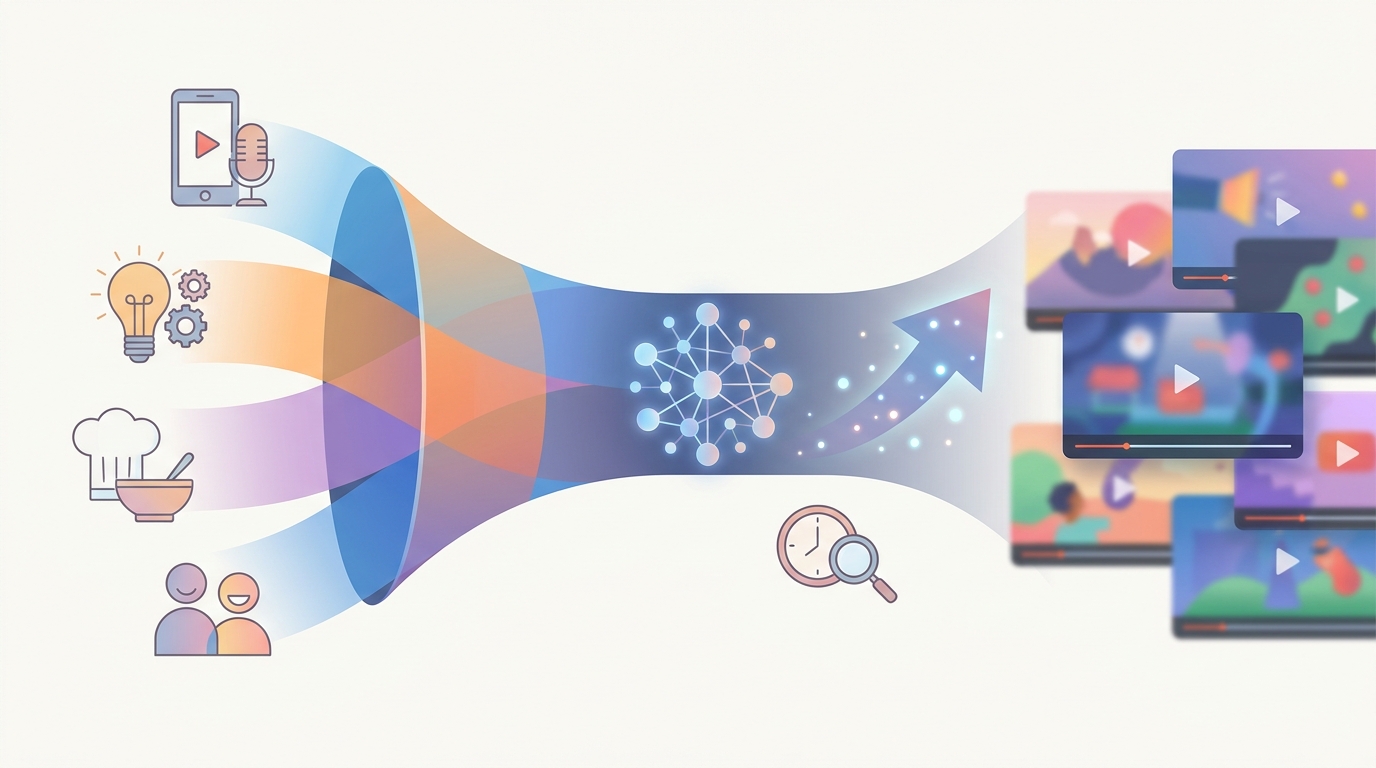
The YouTube Shorts content most likely to earn recommendations is content that gives a clearly defined viewer a fast, satisfying reason to continue watching. YouTube does not publish a universal winning niche, fixed format, or guaranteed length. Its recommendation documentation instead centers personalization through viewer signals, including watch history and likes or dislikes. YouTube Help makes audience fit, rather than a single content category, the central principle.
Build formats around a repeatable viewer promise. Useful structures include a misconception corrected with evidence, a before-and-after process, a concise explanation of a surprising fact, a visual comparison, or a story with a clear reversal. Each structure only works when the topic is specific. “How money works” is broad. “Why a price can rise after a discount” gives a viewer a concrete question that can be answered in one Short.
Creators can make broad topics more usable by narrowing the audience, the problem, and the proof. Instead of “tips for better editing,” try “the one caption change that makes this two-step process readable on a phone.” Instead of “history facts,” try “why this map draws a border in the wrong place.” The narrower premise makes it easier to choose relevant visuals, remove unnecessary scenes, and deliver a conclusion that feels earned.
For faceless channels, match every narration line to a visual purpose. Show a diagram for a mechanism, a timeline for a sequence, and an on-screen example for an abstract claim. If the narration says that a fee changes the final price, show the price before the fee, the fee itself, and the final total. If the narration says that timing changed an outcome, show the sequence rather than repeating the claim over decorative footage.
A reliable pre-production test is the “promise, proof, payoff” outline. The promise identifies the specific question in the opening. The proof supplies the evidence, mechanism, or comparison. The payoff resolves the opening question without changing the subject. This outline does not create a ranking guarantee, but it prevents a common Shorts failure: attracting viewers with one idea and spending the rest of the video on a different, less specific topic.
Can adding hashtags improve my Shorts’ discoverability?
Hashtags can help describe a YouTube Short’s topic, but hashtags do not override personalized recommendation signals or guarantee placement in the Shorts feed. YouTube’s recommendation guidance points to viewer-preference signals such as watch history and likes or dislikes, while Shorts format eligibility depends on the relevant duration and orientation requirements. YouTube Help explains the recommendation context, and the ShortSync format guide summarizes the vertical-or-square, three-minutes-or-less format description.
Use a small number of accurate hashtags when they add useful context. A niche topic label can clarify the subject for a potential viewer, particularly when the spoken topic includes specialized terminology. A Short about a specific historical map, for example, benefits more from an accurate subject label than from a long list of generic trend labels. Metadata should reinforce the video’s real subject, not attempt to disguise it.
Do not add unrelated trending terms, lengthy hashtag strings, or labels that promise a topic the Short never delivers. Mismatched metadata can put a video in front of viewers who expected something else, and those viewers are more likely to swipe away. The immediate result may look like additional exposure, but the audience mismatch does not create the viewing response a creator actually wants.
The common misconception is that `#shorts` or a trending hashtag activates a hidden distribution boost. Format eligibility and viewer response are more reliable priorities. Start with a precise topic, an opening that names the value, and a video that fulfills its promise. Add relevant hashtags only as supporting metadata after the core editorial work is complete.
What should you do next?
Choose one specific viewer question, make an eligible vertical or square Short, and edit the opening until the value is unmistakable. Review retention for the exact scene where attention falls, improve the promise-proof-payoff sequence, and check YouTube’s disclosure guidance before publishing realistic AI-assisted material. Try GoFaceless.
Sources & further reading
Keep reading

Should You Use YouTube Shorts for Faceless Content?
Learn when YouTube Shorts makes sense for faceless content, what RPM to expect, and how to choose Shorts-first, long-form, or hybrid.

How the YouTube Shorts Algorithm Works
Learn how YouTube Shorts ranking uses viewer choice, retention, relevance, personalization, competition, and seasonality.

How to Start a Faceless YouTube Channel in 2026
Start a faceless YouTube channel with a focused niche, original format, 30-day testing plan, and YouTube-compliant AI workflow.