

YouTube Shorts algorithm is a personalized recommendation system that uses viewer choice, retention, feedback, and relevance to decide which Shorts to show to individual viewers. When a Short enters the feed, YouTube can observe whether a viewer watches or ignores it, how long the viewer stays, what percentage the viewer watches, and whether the Short appears relevant to that viewer’s interests. Posting frequency alone does not guarantee reach, and topic interest, competition, and seasonality can change a Short’s opportunity.
Key takeaways:
- YouTube says that Shorts are ranked on performance and relevance to each viewer in its Shorts search and discovery guidance.
- YouTube lists viewer choice to watch or ignore, average view duration, average percentage viewed, likes and dislikes, and post-watch survey responses among Shorts performance signals in YouTube Help.
- Topic interest, competition, and seasonality can alter a Short’s potential reach even when the Short itself is well made, according to YouTube Help.
- YouTube’s Shorts monetization policy distinguishes uploads made on or after October 15, 2024 and requires creators to meet applicable content, rights, and monetization requirements; duration by itself does not establish monetization eligibility in YouTube Help.
What factors influence the ranking of a YouTube Short?
YouTube Shorts ranking depends on two connected judgments: how a particular viewer responds to a Short and how relevant YouTube believes that Short is to the viewer. YouTube Help states that “Shorts are ranked based on performance and relevance to each viewer” in its Shorts search and discovery guidance. The practical sequence is straightforward: a viewer sees a Short, chooses to watch or ignore it, keeps watching or swipes away, and may provide explicit or implicit feedback.
YouTube’s documented performance signals for Shorts include whether viewers choose to watch or ignore a Short, average view duration, average percentage viewed, likes and dislikes, and post-watch survey responses. Viewer choice matters because a Short has to earn attention in a swipe-based environment. Average view duration and average percentage viewed indicate whether the Short held attention after the opening. Likes, dislikes, and survey responses add signals about whether the viewing experience was satisfying, rather than merely attention-grabbing.
Creators should interpret the signals together rather than hunt for one universal metric. A Short with an arresting first frame may earn many initial watches but lose viewers before delivering its promise. A Short with a high percentage viewed may be concise but too narrow to attract a larger relevant audience. A useful review asks three separate questions: Did the intended viewer stop? Did the Short deliver the stated value quickly? Did the ending make the viewer feel the time was worthwhile?
Relevance comes from the viewer’s watch and search behavior, topics the viewer engages with, and the Short’s available context. Titles, captions, spoken words, and visual context should accurately establish the topic. A budgeting Short titled “You need to see this” gives YouTube and the viewer little useful context. A title such as “The subscription charge hiding in a monthly budget” identifies a subject, a problem, and a likely audience. Precise packaging helps the right viewer decide to watch and helps YouTube make a better initial match.
What does YouTube Shorts require from a creator?
YouTube Shorts does not publish a fixed upload cadence or a universal target length that guarantees recommendation. YouTube evaluates each Short through likely audience response and relevance, so the creator’s practical task is to make the topic, audience, and payoff understandable immediately. A creator does not need to post daily to satisfy an algorithmic quota. A creator does need each Short to give a likely viewer a clear reason to stop, understand the premise, and stay through the promised conclusion.
A useful production brief can make that requirement concrete. Before recording or editing, identify the target viewer, the single problem or curiosity point, the evidence or demonstration, and the final payoff. For example, a Short for new spreadsheet users could open on an incorrect total, identify the formula mistake, show the corrected formula, and end on the accurate result. That sequence gives the viewer a reason to watch each next moment instead of relying on vague suspense.
How can I increase my Shorts views and engagement?
Creators can increase YouTube Shorts views and engagement by improving the first seconds, matching each Short to a defined viewer need, and giving viewers a reason to remain until the final frame. YouTube lists watch-or-ignore behavior, average view duration, and average percentage viewed as performance inputs for Shorts. A Short should therefore state or visibly demonstrate its payoff early instead of making viewers wait through an unrelated introduction. A Short about spreadsheet mistakes should show the wrong result or corrected result before explaining the fix.
Build each YouTube Short around one idea. Start with a contrast, a direct question, a surprising visual, a result, or a clearly stated mistake that creates a specific expectation. Then remove every line, transition, stock clip, or decorative effect that does not advance that expectation. End with the answer, reveal, comparison, or useful next action that the opening promised. A loop can be effective when the final frame naturally reconnects to the opening premise, but an unclear ending is not a dependable retention tactic.
Consider a worked example. A generic Short might begin, “Here are three tips to save money,” then spend several seconds on an animated logo and a broad definition of budgeting. A more specific version could begin with “This $12 charge can repeat every month without showing up in your grocery budget,” show a sample budget category, explain where to look, and end with the action: review recurring charges before setting the next month’s budget. The second structure gives a particular viewer a more concrete reason to watch and a clear reason to finish.
Use packaging to attract the correct viewer rather than the broadest possible audience. Test multiple hooks for the same core idea while keeping the audience and value proposition stable. One version might lead with a common mistake, another with the finished result, and a third with a direct question. Compare retention and feedback in YouTube Analytics, then identify the exact moment where viewers leave. Revising the first visual, simplifying a sentence, or moving the proof earlier is more useful than changing every element at once.
Comments can provide a repeatable topic pipeline when they reveal recurring questions from the audience already responding to the channel. A creator who receives repeated questions about invoice tracking, for example, can make separate Shorts on late-payment reminders, naming conventions, and a simple weekly review. Those follow-ups are not guaranteed distribution, but they are grounded in a recognizable audience need and make the channel’s subject matter easier to understand.
What role does personalization play in the Shorts algorithm?
YouTube Shorts personalization means two viewers can receive different recommendations for the same topic because YouTube predicts relevance for each individual viewer. YouTube Help explains that Shorts ranking considers performance and relevance, while the Shorts feed can reflect viewing history, search history, subscriptions, and topics a viewer has engaged with in YouTube’s discovery guidance. A Short is not ranked once for all viewers; YouTube repeatedly evaluates possible matches between a Short and viewers.
For creators, YouTube Shorts personalization changes the definition of “good content.” A Short does not need to appeal to every person using the Shorts feed. A Short needs to be unmistakably useful, entertaining, or interesting to a recognizable group. A beginner investing explainer should say or show that it is for beginners. A B2B software workflow should identify the role, workflow, or business problem it addresses. A cooking Short should signal whether it is for quick weekday meals, beginner techniques, or a specialized dietary need.
Specificity helps in two ways. Specificity lets viewers self-select: the right viewers are more likely to understand why the Short matters to them, while the wrong viewers have less reason to linger. Specificity also gives YouTube more coherent contextual signals through the subject matter, language, visuals, and audience response. Specific does not mean needlessly narrow; it means that the viewer can identify the promise without guessing.
Personalization also explains uneven view patterns. A Short may find an audience gradually as YouTube receives response data from viewers with relevant histories. Another Short may receive limited response because the initial viewers did not match the intended audience or because the subject had little current demand. Neither pattern proves that a channel has been permanently rewarded or penalized. A channel that covers several topics can still work, but every Short should make its audience and promise clear enough to stand on its own.
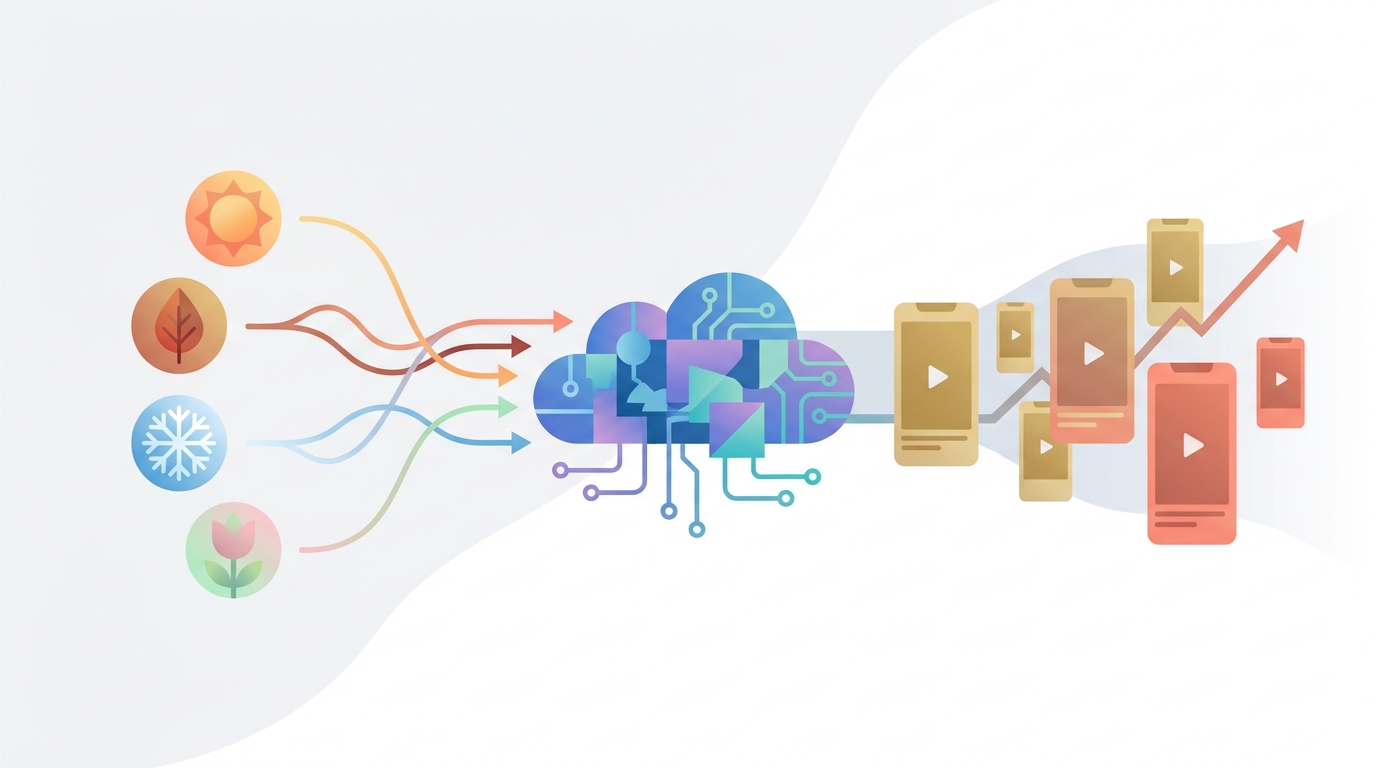
How do external factors like seasonality affect Shorts viewership?
External conditions affect YouTube Shorts viewership because each Short competes for attention within a changing pool of viewer interest and competing videos. YouTube identifies topic interest, competition, and seasonality as external factors that can influence how many viewers see a Short in its Shorts discovery documentation. These external factors can increase or reduce a Short’s opportunity without proving that the creator’s production quality changed.
Topic interest is the number of viewers currently interested in a subject. Competition is the volume and relative performance of other Shorts seeking attention from that audience. Seasonality covers recurring shifts in demand, including holiday planning, back-to-school questions, sports events, product launches, tax preparation, and seasonal travel. A well-retained tax-preparation Short can have more potential viewers when people are actively seeking tax help than during a period when that question is less urgent.
Creators can plan around recurring demand without chasing every calendar event. Start by listing moments that genuinely fit the channel’s expertise and existing audience. A personal-finance channel might prepare content around annual budgeting, tax-related organization, or holiday spending. A travel channel might prepare location-specific planning content before a relevant travel season. The important editorial question is not “What is trending?” but “What recurring question will this channel’s viewer have at this time?”
Publishing before peak demand can give a Short time to reach likely viewers while interest is building. When a topic is crowded, use a sharper angle instead of a broader claim. Rather than “Back-to-school organization tips,” a Short could answer “How to organize one week of assignment deadlines in a calendar.” Rather than “Holiday budget advice,” a Short could show “How to separate gift spending from monthly bills.” A narrower, useful answer can make the intended audience and payoff easier to recognize.
A lower-view Short during a competitive period can still supply useful evidence. Review whether the Short held the viewers who chose to watch, whether comments revealed a clearer need, and whether the same audience responded to a more specific follow-up. External competition affects reach, while retention and feedback help explain what happened after a viewer encountered the Short. Those are different questions and should be analyzed separately.
What are the monetization rules for YouTube Shorts?
YouTube Shorts monetization requires more than publishing a Short that receives views. Creators need to meet YouTube Partner Program eligibility requirements, accept the applicable Shorts Monetization Module, and comply with YouTube’s content, rights, and monetization requirements before eligible Shorts revenue can apply. YouTube’s Shorts monetization policy includes an important date distinction for Shorts uploaded on or after October 15, 2024. Creators should use the policy page for the current duration and eligibility details because length alone does not establish monetization.
The policy facts and the business interpretation should remain separate. The policy sets requirements around participation, eligible content, and rights. The practical business implication is that a creator should confirm rights before building a production system around a format. A Short can attract viewers and still create monetization problems if the creator does not have the necessary permissions for music, footage, images, narration, or other material used in the video.
Original, rights-cleared content matters especially for channels that use third-party clips or repeat visual assets. A creator should know the source of every recurring visual element and audio track, keep necessary permissions organized, and avoid assuming that a popular clip is free to reuse. This is not a claim that every reused element automatically prevents revenue; eligibility depends on YouTube’s policies and the facts of the individual upload. It is a practical reason to treat rights review as part of production rather than as an afterthought.
Treat monetization as a business layer rather than a ranking factor. YouTube’s published Shorts discovery guidance describes recommendation in terms of viewer performance and relevance; it does not say that monetization status guarantees distribution. A monetized Short can underperform if viewers ignore it or leave early, while a non-monetized Short can still receive broad viewing if it is relevant and satisfying. Creators should therefore track audience behavior and revenue as related but distinct outcomes.
What does Shorts monetization cost?
YouTube does not charge creators a separate fee simply to have an eligible Short considered for monetization. The practical costs are production time, rights management, and any tools, assets, or freelancers used to create the video. A channel using original screen recordings may have different costs from a channel licensing footage, commissioning animation, or recording narration, but each format still needs a clear process for confirming usable rights.
Budgeting before scaling protects the channel from a common operational problem: producing a high volume of videos before confirming that the visuals and audio can be used consistently. A simple production checklist can include the script source, music source, visual source, permission status, and final upload review. That checklist does not replace YouTube’s policies or legal advice. It does make rights management visible in the daily workflow.
How does the Shorts algorithm differ from the long-form video algorithm?
The YouTube Shorts algorithm differs from long-form discovery because Shorts are commonly encountered in a continuous, swipe-based feed, while long-form videos are often chosen from Home, Search, subscriptions, suggested videos, or playlists. For Shorts, the immediate decision to watch or ignore and the ability to retain attention are especially consequential. YouTube explicitly lists viewer choice, average view duration, and average percentage viewed among Shorts performance signals in its creator guidance.
The underlying principle remains similar across formats: YouTube seeks to recommend videos individual viewers are likely to value. The creator workflow differs because the viewing context differs. A long-form video can earn a deliberate title-and-thumbnail decision and develop an argument, story, tutorial, or review over multiple minutes. A Short must establish its premise while the viewer is actively deciding whether to swipe to the next video.
Do not simply cut a long-form introduction into a YouTube Short. Rebuild the Short opening for feed discovery. Lead with the result, tension, claim, or visible mistake; provide only the context necessary to understand it; then use the final seconds to complete the promise. For example, a ten-minute tutorial might begin with background on a spreadsheet workflow, while a related Short should begin with the broken formula or corrected result and reserve the background for a brief follow-up line.
A YouTube Short can introduce a longer video, but the Short must stand on its own. A useful Short can teach one step, answer one question, or demonstrate one result before directing an interested viewer toward deeper material. An incomplete trailer that withholds the answer may create frustration rather than satisfaction. The Shorts feed rewards a clear, complete viewing experience more reliably than a vague invitation to leave the feed.
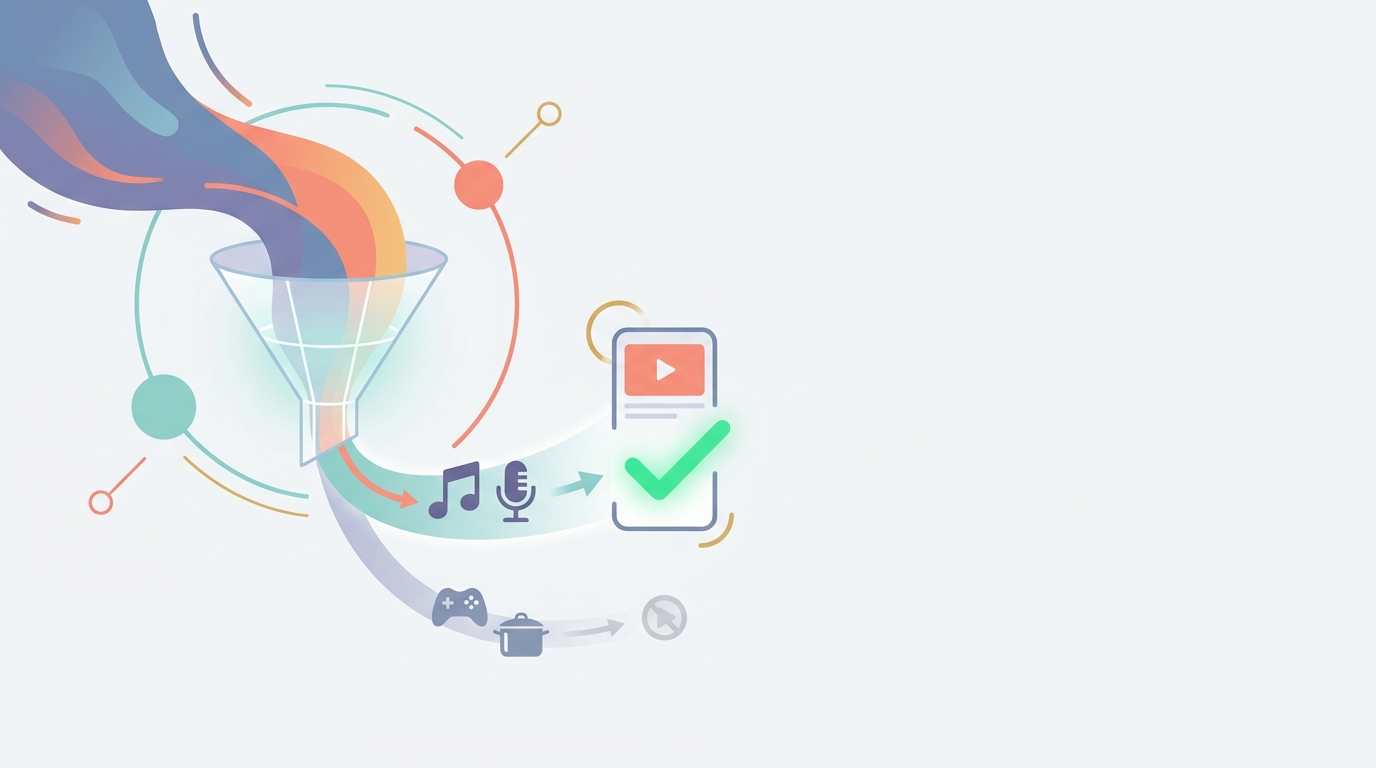
Is there bias in the YouTube Shorts algorithm towards certain types of content?
YouTube Shorts recommendation can produce unequal outcomes across content types, but creators should distinguish YouTube’s official ranking guidance from independent research findings. A 2025 research paper examining YouTube Shorts reported a tendency toward joyful or neutral content and disproportionate promotion of already popular videos in the study’s arXiv record. That study describes the researchers’ observed findings; it is not a published YouTube rule stating that negative, serious, or niche content cannot succeed.
YouTube’s official explanation centers on performance and relevance to individual viewers. That explanation does not mean every creator, topic, or format will receive identical exposure. Personalized recommendation can create feedback loops: a Short that earns a strong early response from relevant viewers may be shown to more similar viewers, while a new format may need clearer contextual signals before YouTube identifies a responsive audience. Competition and changing topic interest can add further variation.
The common misconception is that YouTube manually favors one universal emotion, format, or creator category. Creators should avoid replacing one unsupported theory with another. A serious topic does not need artificial positivity, and a niche subject does not need to mimic every viral template. The better approach is to make the emotional tone appropriate to the subject and make the viewer benefit concrete.
A serious Short about an expensive mistake, for example, can use a constructive structure: name the problem, show the evidence or consequence, explain the correction, and give the viewer a next step. That structure gives viewers value without minimizing the subject. Evaluate several comparable Shorts rather than drawing a conclusion from one upload, because audience match, topic interest, competition, and ordinary variation can all affect an individual result.
What strategies can faceless-video creators use to optimize their Shorts?
Faceless-video creators can optimize YouTube Shorts by making narration, on-screen structure, captions, and visuals reinforce one clear promise from the first frame. YouTube ranks Shorts using viewer-response signals such as average view duration and average percentage viewed, so a faceless format needs readable context and purposeful visual change throughout the video rather than a static background according to YouTube Help. A face is optional; a clear and satisfying viewing experience is not.
Use a repeatable production brief with six elements: audience, single takeaway, hook, proof or example, visual sequence, and final payoff. A finance Short might pair a voiceover about a budget category with an on-screen example of the category. A software Short might pair the narration with a screen demonstration. A history Short might use a timeline, map, or labeled archival visual where the visual adds information rather than merely filling the frame.
Pair each spoken point with a visual that advances understanding. Useful visual changes include a diagram, screen demonstration, timeline, comparison, document excerpt, highlighted keyword, or before-and-after example. Captions should make the message easier to follow, especially when viewers are watching without sound, but captions should remain readable. Dense blocks that duplicate every spoken word can obscure the actual demonstration and make the Short harder to process.
Create variations systematically instead of changing a topic, hook, pacing, and visual style all at once. Keep the topic and core takeaway constant while testing a different first line, visual opening, or order of explanation. Review the retention curve to locate where viewers leave, then revise the specific moment that lost attention. If viewers leave before the example appears, move the example earlier. If viewers leave after the hook, check whether the next line fulfills the opening claim quickly enough.
Faceless production also benefits from editorial quality control. Confirm that the narration matches the on-screen evidence, that captions do not contradict the voiceover, and that each visual is usable with the necessary rights. Automation can speed up scripting, voiceover, visuals, and captions, but automation does not replace the creator’s responsibility to verify accuracy, audience fit, and permissions. A repeatable workflow is valuable only when it produces a clear and trustworthy final Short.
Ready to turn a strong Shorts idea into a repeatable workflow?
Try GoFaceless to build a faceless Shorts workflow from script to captions.
Sources & further reading
Keep reading

YouTube Partner Program Tips for New Eligibility
Plan for YouTube’s 2027 YPP thresholds with a clear choice between watch hours and Shorts views, plus a 90-day tracking sprint.

Should You Use YouTube Shorts for Faceless Content?
Learn when YouTube Shorts makes sense for faceless content, what RPM to expect, and how to choose Shorts-first, long-form, or hybrid.
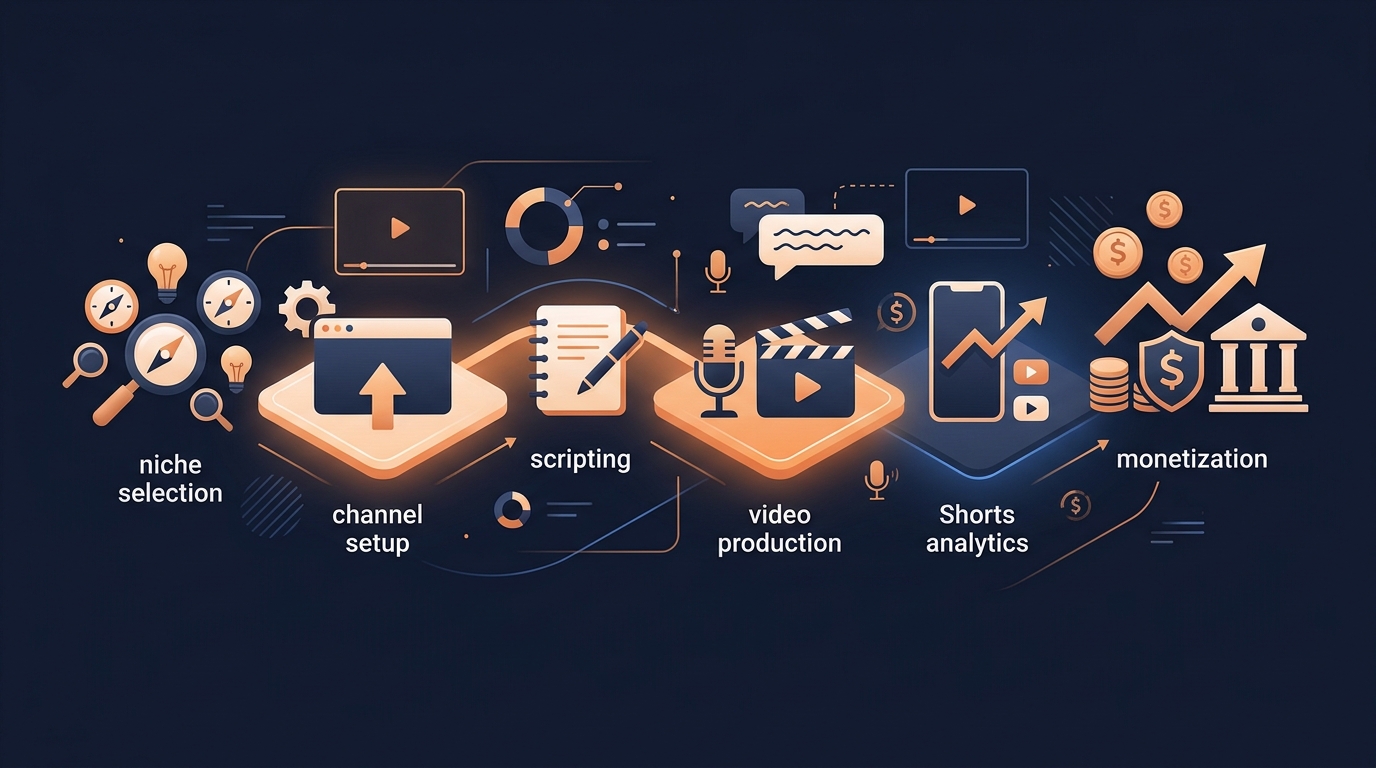
How to Build and Monetise a Faceless YouTube Channel
A practical map for building a faceless YouTube channel—from choosing a niche and making videos to growing on Shorts and creating multiple revenue streams.