
YouTube profanity monetization is a placement-based system, not a blanket ban: yes, you can use strong profanity in a YouTube video and still earn full ad revenue. Since July 29, 2025, even strong profanity in the first seven seconds of a video or Short can qualify for full ads. What still costs you revenue is focal profanity throughout the video and stronger profanity in titles or thumbnails.
Key takeaways:
- On July 29, 2025, YouTube announced that strong profanity in the first seven seconds of a video or Short can be eligible for full advertising revenue, reversing the old limited-or-no-ads treatment.
- YouTube's advertiser-friendly guidelines classify focal profanity throughout a video as limited-ad content.
- Stronger profanity in titles or thumbnails is classified as no-ad content, the strictest tier.
- The cited guidelines do not establish a separate profanity rule for captions or on-screen text; creators should treat packaging text conservatively.
- Bleeping spoken audio does not fix a profane title or thumbnail, because packaging is judged under its own rule.
Can strong profanity in the first seven seconds still qualify for full ads?
Yes. On July 29, 2025, YouTube announced in its official help community that videos and Shorts using strong profanity in their first seven seconds could be eligible for full advertising revenue. Before that change, the same opening placement could result in limited or no ad revenue, which is why so many creators still delay every strong word past the seven-second mark. That habit is now outdated. The update explicitly covers both long-form videos and Shorts, so an expletive in your opening line is no longer an automatic revenue penalty on either format.
The practical effect: if your script opens with a strong reaction or an unfiltered quote, you do not need to restructure the hook purely for monetization. You still need to check the rest of the video and the packaging, because the seven-second update changed only the opening rule, not the rules for sustained language or metadata.
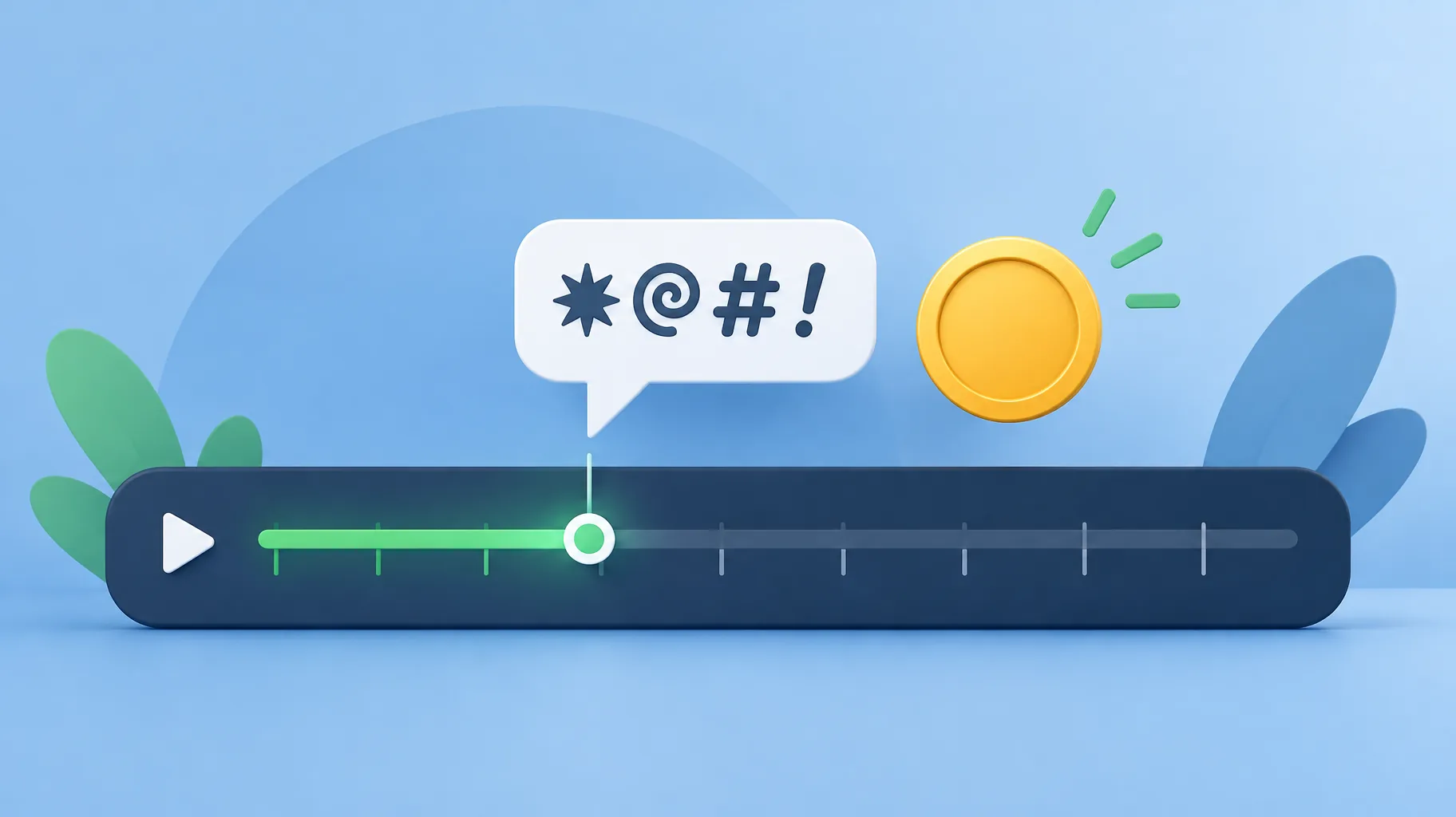
How is occasional profanity different from profanity throughout a video?
Occasional strong words in spoken dialogue are treated far more leniently than profanity that runs through the whole video. YouTube's advertiser-friendly guidelines classify focal profanity throughout a video as limited-ad content, meaning ads still run but from a reduced pool of advertisers and typically at lower revenue. The opening-seven-seconds update did not touch this tier. A video where strong language is a recurring feature of the narration, rather than a moment of emphasis, sits in a different category from a video with one or two expletives.
The distinction to apply when scripting:
- Occasional use: a strong word here and there in dialogue, including in the first seven seconds, can still qualify for full ads.
- Focal use throughout: profanity as a defining, repeated element of the audio track is limited-ad content under the current guidelines.
- Packaging use: stronger profanity in the title or thumbnail is no-ad content, covered in the next section.
A useful self-check before publishing: count the strong words in your narration and ask whether an advertiser would describe the video as "profane" or as "a video with a profane moment." That editorial judgment is what the limited-ads tier is aimed at.
Are profanity rules different for titles and thumbnails?
Yes, and they are stricter than the dialogue rules. YouTube's advertiser-friendly guidelines classify stronger profanity in titles or thumbnails as no-ad content, the most severe tier. So a video whose spoken content would earn full ads can still lose all ad revenue if the title or thumbnail contains stronger profanity. Packaging is judged separately from the audio track, and the July 29, 2025 opening-profanity update did not relax this rule.
| Where the profanity appears | Guideline treatment | Source |
|---|---|---|
| Strong profanity in the first seven seconds (video or Short) | Can be eligible for full ads since July 29, 2025 | YouTube help community announcement |
| Occasional profanity in spoken dialogue | Generally compatible with full ads; not singled out as limited | Advertiser-friendly guidelines |
| Focal profanity throughout the video | Limited ads | Advertiser-friendly guidelines |
| Stronger profanity in title or thumbnail | No ads | Advertiser-friendly guidelines |
| Captions and on-screen text | No separate rule established by the cited sources; treat conservatively | Not separately addressed in the cited pages |
The safest packaging habit is to keep titles and thumbnails clean even when the dialogue is not. If you are testing edgier hooks, our free library of proven video hooks is a faster way to find a strong opener that does not put packaging at risk.
Do the opening-profanity rules also apply to Shorts?
Yes. The July 29, 2025 announcement explicitly covers both videos and Shorts: strong profanity in the first seven seconds of either format can be eligible for full advertising revenue, per YouTube's official announcement. The same supporting tiers apply as well, so focal profanity throughout a Short remains limited-ad content and stronger profanity in a Short's title remains no-ad content under the advertiser-friendly guidelines.
One nuance worth knowing: because Shorts are short by design, "throughout the video" is easier to trip. Two strong words in a 15-second Short is a much higher density than the same two words in a 12-minute video, and density is what pushes a video toward the focal-profanity tier. If you are weighing Shorts against long-form for a faceless channel, the trade-offs go beyond language; see our breakdown of whether YouTube Shorts fit faceless content.
Does bleeping the narration resolve every profanity issue?
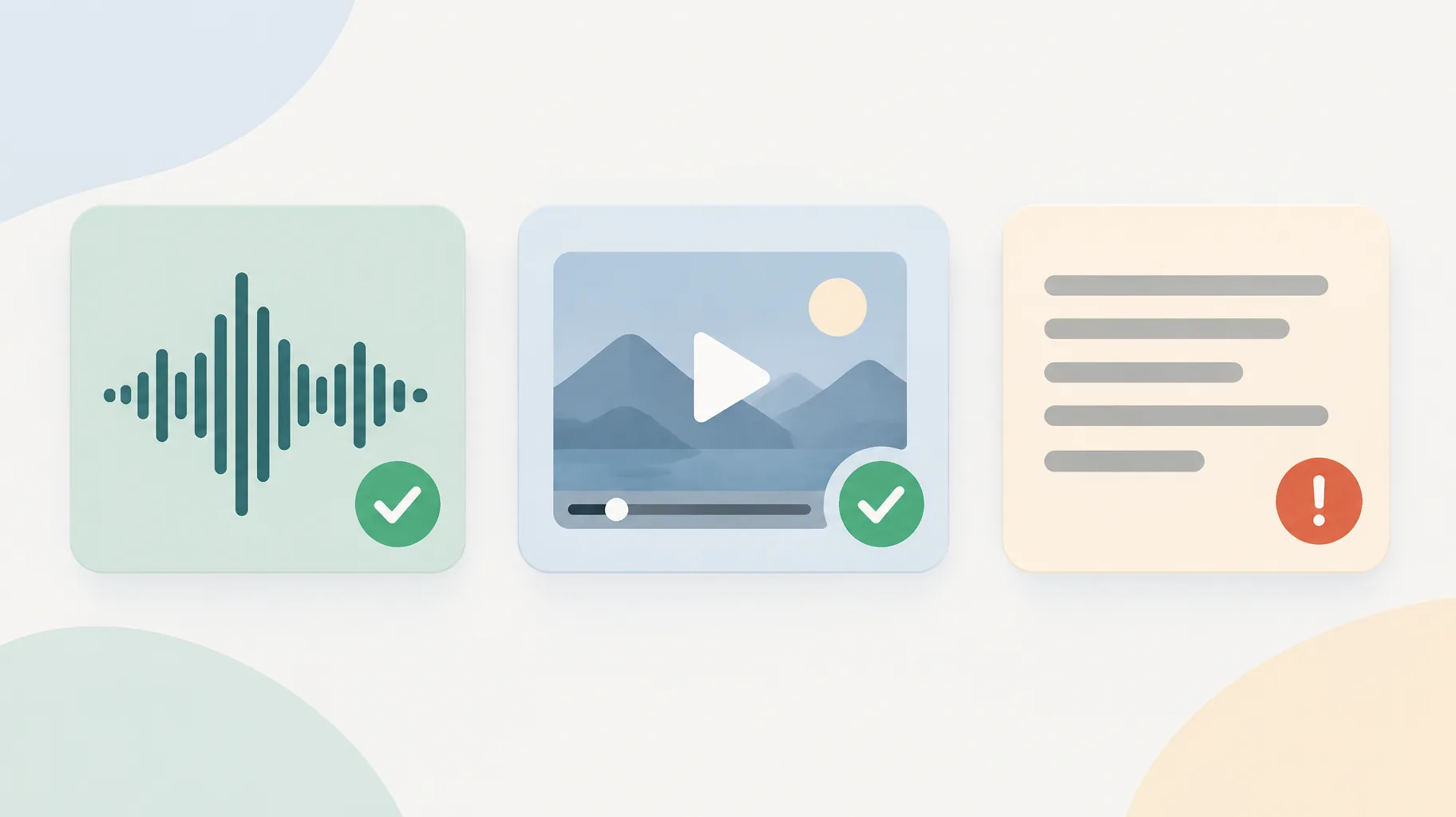
No. Bleeping addresses only the spoken-audio track, and profanity risk lives in at least three places: the dialogue, the sustained tone of the video, and the packaging. A bleeped video with stronger profanity in its title or thumbnail is still no-ad content under the advertiser-friendly guidelines, because that rule targets the packaging, not the audio. Bleeping also does nothing if the overall video is still built around profanity as its focal element.
Bleeping is a reasonable tool for one job: softening a specific spoken moment you want to keep in the cut. It is not a compliance pass. A real pre-publish check looks like this:
- Dialogue: count strong words and confirm they are occasional, not focal.
- Opening: confirm you are relying on the July 29, 2025 rule, not the outdated seven-second ban.
- Packaging: scrub the title, thumbnail, and description of stronger profanity entirely.
What do the cited guidelines establish about profanity in captions and on-screen text?
The cited sources do not establish a separate, explicit rule for profanity in captions or burned-in on-screen text. The advertiser-friendly guidelines address profanity in the video's audio and in titles and thumbnails, and the July 29, 2025 announcement addresses the first seven seconds of videos and Shorts. Neither document, as cited here, carves out captions as their own category. That is an evidence gap, not a safe harbor: thumbnails are already treated as no-ad surfaces for stronger profanity, so assuming visible text is unpoliced would be a guess, not a reading of the rules.
The conservative workflow is to keep on-screen text and captions at the same cleanliness level as your title. This is where an editable production pipeline earns its keep. With GoFaceless (our own product), you can edit the AI-generated script and caption wording and regenerate the narration for a single section before export, so preparing a clean-text alternative take is a small revision rather than a re-record. That said, no software can promise monetization approval; the compliance judgment stays with you and YouTube's review.
If a video does get limited ads and you believe the rating is wrong, you can request a human review, and creators who prefer not to appear on camera can still record an effective monetization appeal without showing their face.
The bottom line on swearing and monetization
You can swear on YouTube and still get monetized at full rates, provided the strong language stays occasional, out of the title and thumbnail, and away from becoming the video's defining feature. If you want a faster way to produce alternate narration and caption versions before you publish, GoFaceless turns a topic into a finished faceless video with an editable script, voiceover, and captions in one pass. Plans start at $29 per month on the pricing page.
Sources & further reading
Keep reading

How to Maximize YouTube Shorts Revenue
Maximize YouTube Shorts revenue with monetization eligibility, higher-RPM niche choices, music decisions, and long-form growth tactics.
Who Gets YouTube Revenue While a Content ID Claim Is Disputed?
During a Content ID dispute, YouTube holds the revenue and pays the winner after resolution. Learn how the five-day dispute window decides what gets held.

Can YouTube Take Back Revenue After It Has Paid You?
Yes, YouTube can offset invalid-traffic earnings against your AdSense balance even after payment. Learn how clawbacks, delays, and yellow icons differ.