
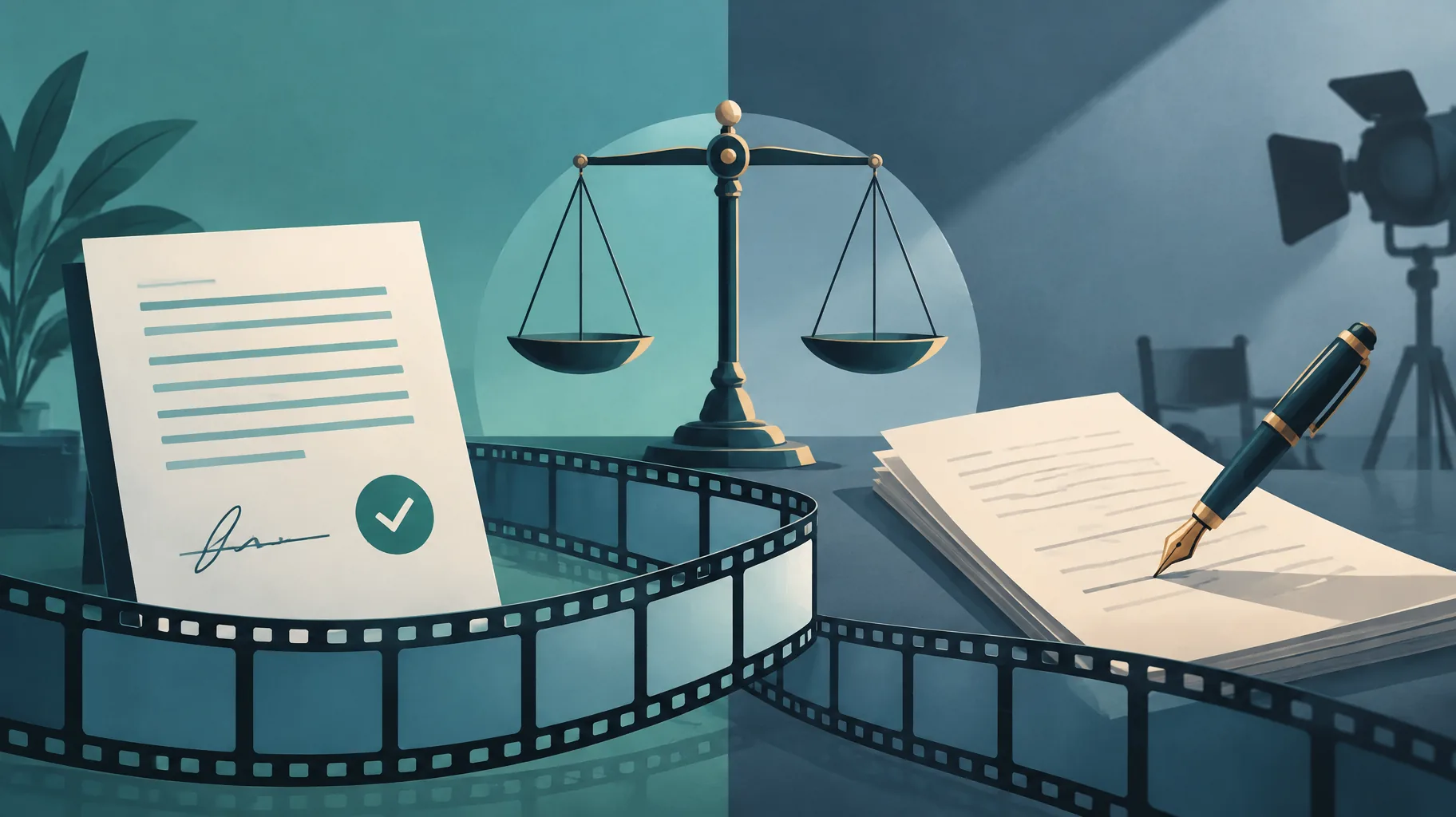
Copyright ownership in an AI-generated video is separate from the tool's commercial-use permission. A commercial license lets you sell the output; it does not create copyright in it. Under U.S. Copyright Office conclusions published January 29, 2025, protection depends on your human contributions: your script, your arrangement, and your edits, not the generated imagery or the prompts you typed.
Key takeaways:
- On January 29, 2025, the U.S. Copyright Office published its generative-AI copyrightability conclusions, interpreting existing law rather than creating a new statute.
- Merely providing prompts does not make you the author of an AI output, the Office concluded.
- Protection can extend to human-written narration, creative arrangements of generated clips, and human modifications, judged component by component.
- A tool's commercial-use license is a contract between you and that tool; it creates no copyright and binds no one else.
- The U.S. position governs U.S. law only; other countries apply their own authorship rules.
What is the difference between commercial-use permission and copyright ownership?
Commercial-use permission is a contract term: the tool promises not to pursue you for selling its output. Copyright ownership is a property right: it lets you stop anyone else from copying, distributing, or reusing the work. A generator can grant the first because it controls its own claims. It cannot grant the second, because under U.S. law copyright arises from human authorship, not from a subscription tier.
The practical consequence: you can hold a valid license to sell a video you have no power to stop others from copying. Rights clearance and ownership answer different questions, the same way whether AI content can be monetized on YouTube is a separate question from whether you own it. YouTube applies the same logic to licensed footage: reused-content restrictions can apply even with the original creator's permission, because a licence receipt does not prove editorial contribution.
Can prompts alone establish copyright in an AI-generated video?
No. In its January 29, 2025 copyrightability conclusions, the U.S. Copyright Office found that the mere provision of prompts does not establish authorship of the output. Prompts function as instructions; the system, not the prompter, determines the expressive details of each generated frame. A longer, more detailed prompt improves the result but does not make you the legal author of what comes out.
One nuance matters for faceless creators: a prompt that contains your own expressive text, such as narration you wrote, is different from a prompt describing what you want to see. The text itself remains yours. The instruction does not.
Can my original script be protected if the visuals are AI-generated?
Yes. The U.S. Copyright Office concluded that protection can extend to sufficient human-determined expressive elements, including human-authored material embedded in an AI-assisted work. Your script stays yours even if every visual is generated. Register of Copyrights Shira Perlmutter stated: "Where that creativity is expressed through the use of AI systems, it continues to enjoy protection."
The cleanest way to see your position is component by component:
| Component of the finished video | Protectable? | Basis |
|---|---|---|
| AI-generated imagery and clips | No, standing alone | Prompts alone do not confer authorship |
| Your written narration or script | Yes | Human-authored material |
| Your selection and arrangement of clips | Potentially | Creative arrangement |
| Your edits and modifications | Potentially | Human modification |
Can creative selection, arrangement, or editing qualify for protection?
Potentially, yes. The U.S. Copyright Office named creative arrangements and modifications as categories that can qualify, but it set no automatic threshold: no specific number of cuts, filters, or reordered clips guarantees protection. The test is whether your choices amount to perceptible creative expression rather than mechanical assembly.
A creator who restructures generated clips around an original argument, re-times them to a self-written narration, and re-cuts sequences across revisions has a stronger claim than one who stitches outputs in the order they were produced. Treat every edit as evidence of judgment, not as a checkbox that automatically qualifies.
What records should I keep to document my human creative contribution?
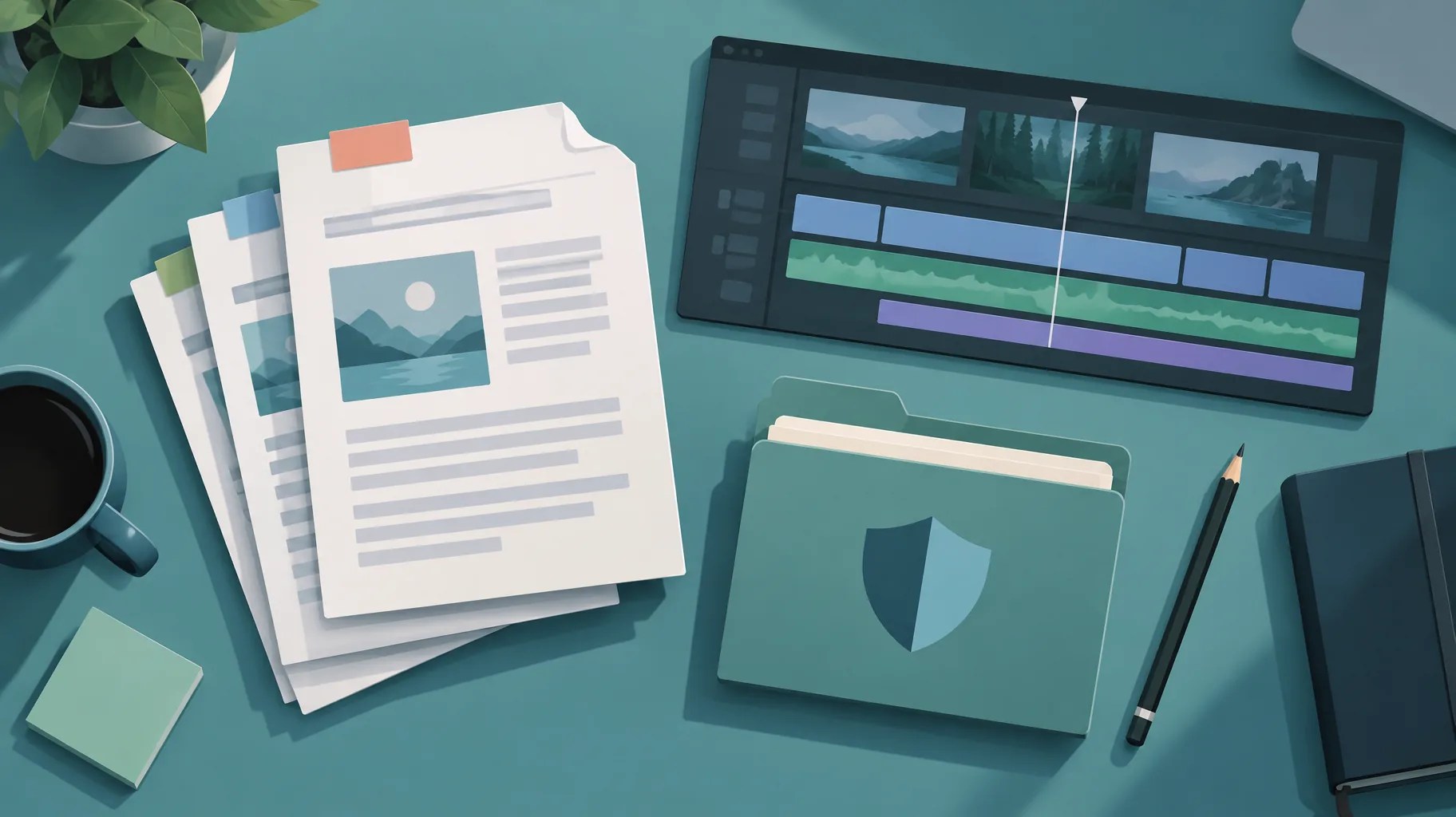
Keep dated script drafts, editing timelines or project files, prompt and revision logs, and exported versions showing changes over time. These records serve two purposes: supporting a registration that accurately identifies your human-authored material, and answering platform originality reviews. YouTube's monetization appeals, for example, accept an unlisted video under five minutes with voiceover instead of an on-camera appearance, showing the channel URL in the first 30 seconds and demonstrating how the channel's work is made.
A faceless-video platform such as GoFaceless is one production environment where you combine your own scripts and editorial decisions with generated assets; whatever tool you use, read its current terms separately, because a subscription creates commercial permission, not copyright ownership. Disclosure is yet another layer: AI content disclosure rules govern labeling, not ownership.
Does the U.S. Copyright Office's position establish the rules in other countries?
No. The January 29, 2025 publication interprets U.S. law only, and it interpreted existing law rather than creating a new statute. Other jurisdictions apply their own authorship standards, and some have considered different approaches to computer-generated works. If you sell or license videos internationally, treat the U.S. framework as your home-country baseline and check the rules where your buyers or licensees operate.
Put your name on the parts you actually made
If you want one environment for combining your own scripts with generated voiceover, visuals, and captions, GoFaceless covers that pipeline in a single pass, with plans from $29/mo on the pricing page. Whatever tool you choose, read its terms yourself: commercial permission is the tool's promise, and copyright is your contribution.
Sources & further reading
Keep reading
Why Is My YouTube Short Over One Minute Blocked by a Copyright Claim?
A YouTube Short over one minute with any active copyright claim is blocked globally. Learn the rule, why it happens, and how to resolve the claim.
When Does YouTube Pay You? Thresholds, Dates, and Holds
YouTube finalizes earnings on the 7th–12th and issues payment on the 21st–26th once you pass the US$100 threshold. Full payment calendar, rollovers, and holds explained.
How Long Does It Take to Make a Faceless YouTube Video?
See realistic AI faceless YouTube video timelines, from 6–12 hours for a first video to about 20 minutes with automation.